jueves, 20 de junio de 2013

CO2 levels at all-time high; scientists call for action.

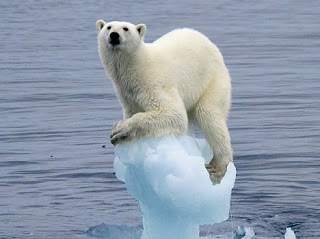
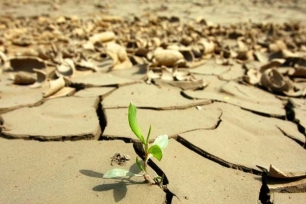
Leading climatologists are calling on world leaders to take better action to control climate change after carbon dioxide levels in the atmosphere were measured at a disturbingly record-breaking high last month.
The Earth System Research Laboratory, belonging to the U.S. National Oceanic and Atmospheric Administration (NOAA) on Mauna Loa Volcano in Hawaii, measured its daily average CO2 reading at more than 400 parts per million for the first time (that is 400 molecules of CO2 for every 1 million molecules in the air). The daily average CO2 figure on May 9 was 400.03, reported Dr. James Butler who is in charge of the Earth System Research Laboratory.
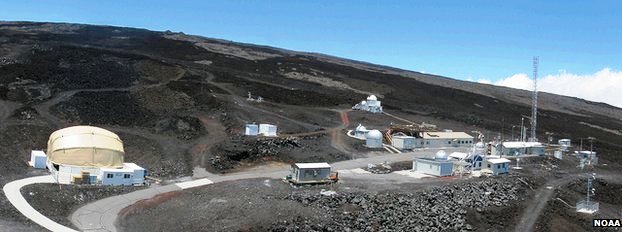
Mauna Loa Volcano NOAA lab / photo courtesy of NOAA
The last time CO2 regularly reached this level, scientists say, was 3 to 5 million years ago, before modern day humans existed, according to BBC News reports. Scientists say the climate back then was also considerably warmer than it is today.

"Mauna Loa and the South Pole observatory are iconic sites as they have been taking CO2 measurements in real time since 1958. Last year, for the first time, all Arctic sites reached 400ppm (parts per million). This is the first time the daily average has passed 400ppm at Mauna Loa," explained Dr. Butler in news reports.
The long-term measurements at Mauna Loa were started by Scripps Institution of Oceanography scientist Charles Keeling. In 1958, he found the concentration at the top of the volcano to be around 315ppm.
 Every year since then, the "Keeling Curve", as it has become known, has been inching higher, news reports stated.
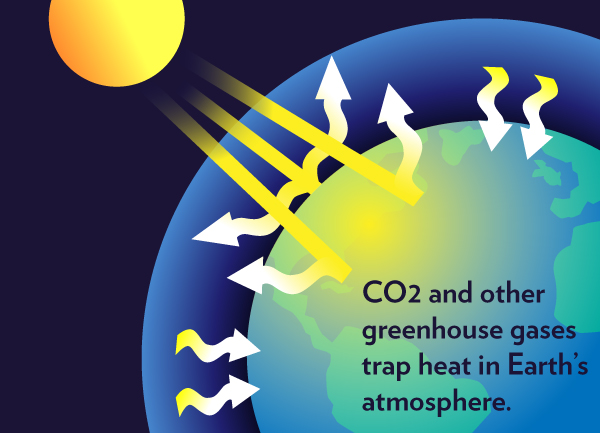
Carbon dioxide greenhouse gases affect planetCarbon dioxide is regarded as the most important of the man-made greenhouse gases, coming principally from the burning of fossil fuels such as coal, oil and gas, and is blamed for raising the temperature on the planet over recent decades. The usual trend seen at Mauna Loa is for the CO2 concentration to rise in winter months and then to fall back as the northern hemisphere growing season kicks in, notes BBC news reports. Forests and other vegetation pull some of the gas out of the atmosphere. This means the number can be expected hopefully to decline below 400 in the coming weeks, but the long-term trend is moving upwards.

Professor Sir Brian Hoskins, head of climate change at the UK-based Royal Society and director of the Grantham Institute for Climate Change at Imperial College London, told the BBC that the new record-breaking figure should "jolt governments into action." Professor Hoskins said a greater sense of urgency was needed to control climate change.

"Before we started influencing the amount of carbon dioxide in the atmosphere, over the last million years it went between about 180 and 280 parts per million," reported Professor Hoskins. "Now, since the Industrial Revolution, and more in the last 50 years, we've taken that level up by more than 40% to a level of 400, and that hasn't been seen on this planet for probably 4 million years."

Carbon Neutral Challenge 2021 Costa RicaProfessor Hoskins did say that the forecast is not all doom and gloom. He noted that changes are happening around the world. For instance, in the United States, a switch from coal to gas in power generation helped reduce carbon dioxide emissions by 200 million tons, bringing them back to the level of the mid-1990s, according to the International Energy Agency. Even though the use of coal increased in some European countries last year due to low prices, emissions in Europe declined by 50 million tons because of the economic slowdown, among other reasons, reported the Paris-based IEA.

The International Energy Agency urged governments to quickly adopt four policies that would ensure climate goals could be reached without harming economic growth. They are: improving energy efficiency in buildings, industry and transport; limiting the construction and use of inefficient power plants; halving methane emissions; and partially phasing out fossil fuel subsidies. These would reduce global energy-related emissions by 8 percent or 3.1 billion tons of CO2 equivalents in 2020, the IEA stated.
Costa Rica has committed to be the first carbon-neutral country by 2021. Costa Rica has been touted in recent months as a world environmental leader for its conservation policies. 
The Central American country has become an international ecotourism destination in the past decade.
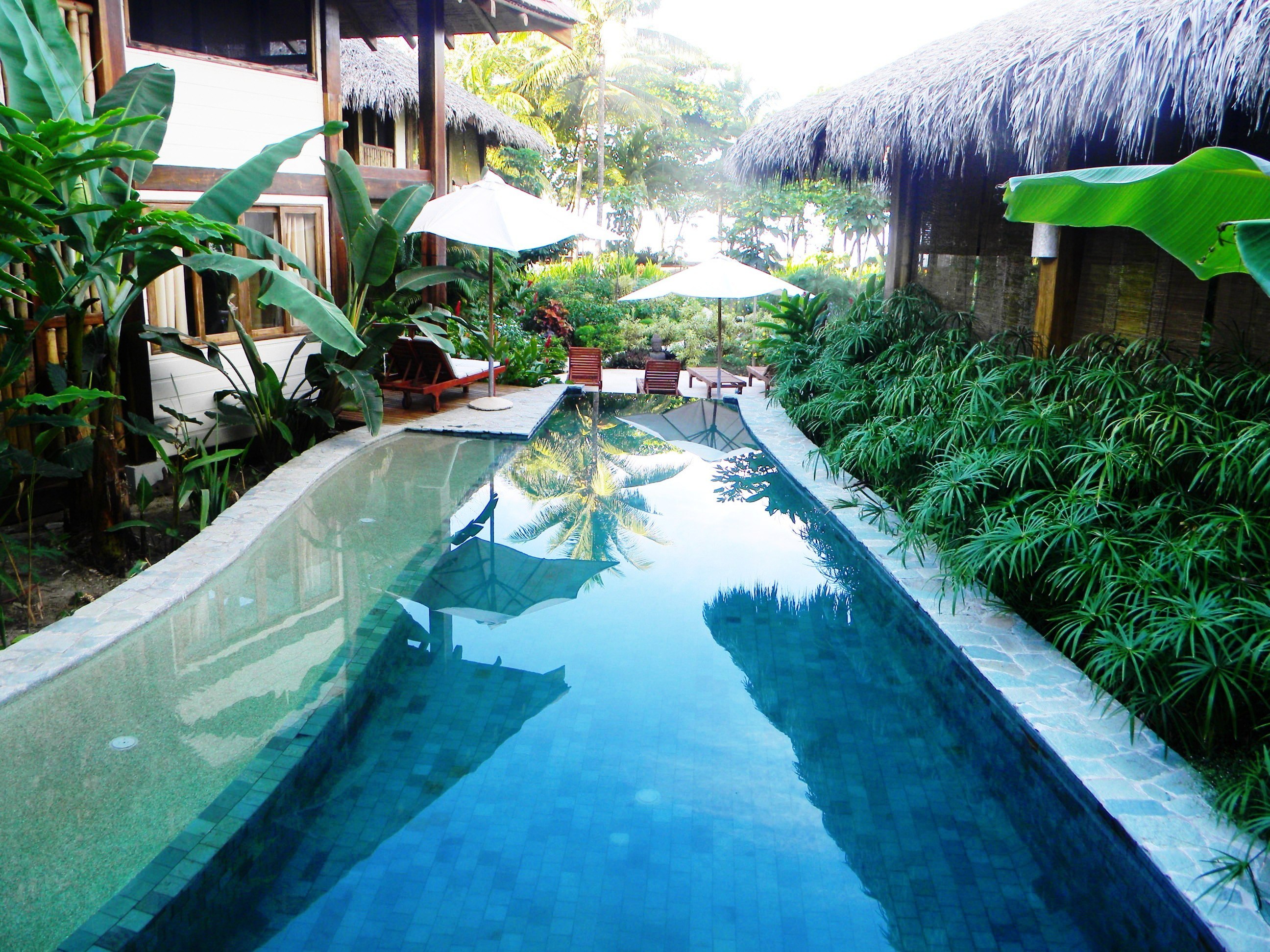
Pranamar Oceanfront Villas & Yoga Retreat, Santa Teresa, Costa RicaOn environmental award-winning beach Santa Teresa, Costa Rica, the boutique hotel Pranamar Oceanfront Villas & Yoga Retreat is a prominent planet-conscious place to stay. The yoga-surf hotel in this southern Nicoya Peninsula paradise takes its commitment to the environment seriously.

The luxury hotel reclaims and cleans its water used at the property to irrigate their organic gardens. They use no herbicides or pesticides on the property. Much of the vegetation is "edible" – fruits, vegetables and herbs supply Pranamar's open-air restaurant with fresh, healthy cuisine. The hotel's composting system completes the food cycle by turning the restaurant's organic waste into natural fertilizer.

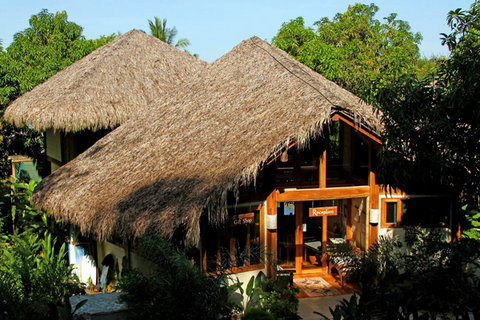
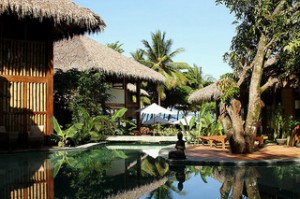
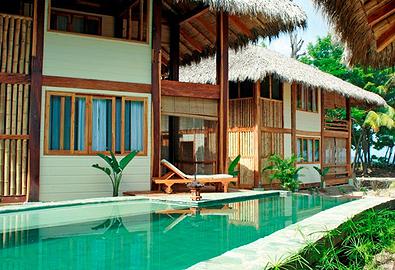
Pranamar Villas Garden Bungalow, Santa Teresa, Costa RicaSustainably farmed and recycled woods were used to construct Balinese-style bungalows and villas. All soaps, laundry detergent, cleaning supplies, and guests' bath amenities are biodegradable. Energy-saving light bulbs and appliances reduce electricity usage. Even the free-form swimming pool is eco-friendly; it's filled with salt-water, meaning less chlorine and other chemicals.
By Shannon Farley


viernes, 7 de junio de 2013

El Ministerio de Educación trabaja por establecer relaciones humanas pacíficas y amigables en el estudiantado

Según el Programa de las Naciones Unidas para el Desarrollo (PNUD), la convivencia se define como: «la dinámica social basada en relaciones de confianza y cooperación, en la que todas las personas se sienten parte de una sociedad, disfrutan de derechos humanos y de oportunidades socialmente construidas y expresadas». Siguiendo esta idea, el Ministerio de Educación Pública (MEP) –en colaboración con el Fondo de las Naciones Unidas para la Infancia (UNICEF)–, diseñó la «Guía para la formulación de la estrategia de convivencia en centros educativos».
Este informe procura la creación de estrategias propias en cada lugar de estudios para optimizar las relaciones entre sus componentes.
Así, se procura poner coto a situaciones indeseables que se han presentado en los últimos tiempos. Ha habido casos de alumnos amedrentados y heridos con armas punzocortantes; o menores que menoscaban la integridad de sus compañeros a través de acoso psicológico y verbal. También es común la discriminación por creencias religiosas, preferencias sexuales o color de piel. A raíz de lo anterior, el MEP comenzó un plan piloto en el 2010 a través de «Convivir».

Dicho programa se compone de actividades culturales y deportivas aupadas por los propios gobiernos estudiantiles. La intención es que, en el futuro, se apacigüe el ambiente intolerante y hostil que se vive en ciertos sectores de la ciudadanía. En palabras del propio ministro de la cartera, Leonardo Garnier Rímolo, «nuestra identidad, independencia y libertad siempre se forja (sic) en convivencia». Y agregó: «El sentido de nuestros actos y pensamientos está tanto en nosotros mismos como en la relación que tenemos con los demás: en lo que nuestros actos, ideas y sentimientos signifiquen para ellos». Las intenciones del jerarca han despertado el reconocimiento público por sus esfuerzos. Pero también le han granjeado agrias disputas con el integrismo local. Aún está fresco el enfrentamiento que generaron los «Programas de Educación para la Afectividad y la Sexualidad». Fue la propia Sala Constitucional la que dirimió el asunto con una decisión salomónica: los alumnos podrían recibir el curso siempre y cuando contaran con la aprobación de sus padres o tutores.
Al final, alrededor de 98% del alumnado de sétimo, octavo y noveno año acabó recibiendo el contenido didáctico.

«Se trata de conocer y disfrutar con las diferencias y las similitudes que nos caracterizan. Especialmente las diferencias que son las que más nos enriquecen, las que nos ayudan a cambiar, a mejorar, a conocer nuevas visiones, nuevos sentimientos», concluyó. Si bien las bases de una buena convivencia se fundan en la familia, estas se fortalecen en los centros educativos. Además, se potencian en los demás espacios sociales: la calle, trabajo, transporte público o cualquier otro sitio donde haya dos o más personas. Así, termina impactando en nuestra calidad de vida. Por eso es imprescindible que la humanidad completa trabaje por establecer relaciones humanas pacíficas y amigables. Esta es una tarea titánica, compuesta por esfuerzos cotidianos en pro de los valores de autonomía, colaboración, respeto y solidaridad.


En ese sentido, el hotel y villas Pranamar se ha caracterizado por estimular estos conceptos. Tienen un enfoque holístico en el que se cultiva el respeto hacia el medio ambiente, más allá de las meras relaciones interpersonales. En cualquier caso, podrá disfrutar de instalaciones de lujo en un ambiente relajado y responsable socialmente.

jueves, 23 de mayo de 2013

Amazing trip San Jose to Santa Teresa Beach using Paquera Ferry .

Santa Teresa Beach is custom-built for fun. You have the perfect combination of relaxing beaches, exciting tropical rainforest and luxurious accommodations and spas. White sand beaches, lush vegetation and spectacular sunsets set an amazing stage for your romantic holiday.

Pranamar Oceanfront Villas & Yoga Retreat, is a winner of the 2012 Trip Advisor Traveler’s Choice Award. Pranamar Villas is a gorgeous, intimate boutique hotel right on the water with luxury two-story villas built around a free-form saltwater pool and tropical gardens, and elaborate beachfront villas. Picture Balinese architecture with bamboo, hardwoods, stone, water and plenty of windows and doors to let in fresh sea breezes.

lunes, 20 de mayo de 2013

El cambio climatico y sus efectos en la flora y fauna

  • Alrededor del 75% de las plantas y el 50% de los animales podrían verse afectados durante los próximos 100 años.
  • Los humanos no serán inmunes ante las consecuencias pues el agua y el aire también se verán afectados.
  • Una intervención rápida puede aplacar el impacto hasta en un 60%.
Aproximadamente el 75% de las plantas y el 50% de los animales podrían enfrentar una mengua sin precedentes durante este siglo como producto del cambio climático. Esto se extrae de una investigación de la Universidad de East Anglia (UEA) en Norwich, Norfolk (Reino Unido). Los resultados se publicaron el domingo pasado en la revista Nature Climate Change.
Estudio consideró 50.000 tipos de plantas y animales. Se determinó que dos tercios de los vegetales y la mitad de las bestias perderán su hábitat climático para el 2080 si no se toman medidas para mitigar los efectos y velocidad del calentamiento global. En otras palabras, la distribución geográfica de la biodiversidad bajará en todo mundo. Según esos cálculos, el mayor riesgo es para las plantas, reptiles y anfibios. Asimismo, zonas como el África subsahariana, América Central, Amazonia y Australia verán mermar sus especies. Mientras tanto, Asia Central, Europa del Este y el Norte de África experimentarán una disminución de plantas sin igual. No obstante, una actuación veloz para amortiguar el cambio climático podría significar la reducción de pérdidas en un 60%. De ser así, habría 40 años más para que las especies se adaptaran. De tal forma, la temperatura mundial subiría solo 2° C para el 2100 respecto a tiempos preindustriales (1765).
Por su parte, el estudio fue financiado por el Consejo de Investigación del Medio Ambiente Natural (NERC). A su vez, estuvo a cargo de la doctora Rachel Warren de la Escuela de Ciencias del Medio Ambiente y el Centro Tyndall para la Investigación del Cambio Climático de la UEA.
Contó con el apoyo de Jeremy Vanderwal, de la Universidad James Cook (Australia); y de Jeff Price, también miembro de la UEA. Según la directora, «se sabía poco acerca de cómo el aumento de la temperatura global afectaría las especies más comunes». Y agregó: «el tema más amplio de la pérdida potencial de especies de amplia distribución es un problema grave, ya que incluso pequeñas reducciones en estas pueden alterar de manera significativa los ecosistemas». Pérdidas enormes en la biosfera. Warren explicó cómo se puede inferir mediante sus pesquisas que las especies más comunes se encuentran en peligro. «Esta pérdida de biodiversidad a escala global empobrecería considerablemente la biosfera y los servicios ecosistémicos que proporciona». Como consecuencia, se volverán más comunes y extremos algunos fenómenos que hoy son más bien esporádicos, como plagas y enfermedades. La científica advirtió, empero, que las estimaciones del equipo fueron «probablemente conservadoras». «Los animales en particular pueden disminuir más que nuestras predicciones por una pérdida de los alimentos de las plantas», alertó la doctora Warren.
Hizo hincapié en el círculo vicioso que también traerá consecuencias importantes para la humanidad. Destacó situaciones relacionadas con la purificación del aire; la calidad del agua y el control de las inundaciones; el ciclo de nutrientes y el ecoturismo. Pero el panorama no es del todo gris. El estudio trae consigo nuevas evidencias decisivas sobre cómo se pueden reducir rápidamente los gases del efecto invernadero. Estas medidas pueden retardar enormemente la pérdida de la biodiversidad, puesto que reducen el importe del calentamiento global de 4° C a 2° C. Dicha ventana de oportunidad permitiría que hubiera 4 décadas de tiempo para que la biodiversidad se adaptase a estas transformaciones de temperatura.
De actuarse a tiempo, las pérdidas de los hábitats climáticos podrían reducirse hasta en un 60%. Por eso es vital que haya un aporte generalizado para el beneficio del medio ambiente. En ese sentido, existen diversas iniciativas públicas y privadas en pro de la conservación. Por ejemplo, el hotel y villas Pranamar (Santa Teresa, Puntarenas) ha sido, desde sus inicios, un lugar dedicado a la relajación y el descanso en armonía con la naturaleza. El centro turístico se toma muy en serio el tema de la huella ecológica, por lo que ha implementado diversos programas como el reciclaje de aguas residuales, el uso de jabones biodegradables; piscina libre de químicos y el empleo de bombillas y electrodomésticos de bajo consumo.
Por: Andrés Figueroa Vásquez y agencia Europa Press.

lunes, 13 de mayo de 2013

Are you happy?
Costa Rica is #1 on the Happiest Planet in the world indexThat seems to be the question being asked in recent times, from boardrooms to bars, international conference centers to offices of government leaders, business schools to book stores. Are we happy? Following our bliss? Living our passion? Are we "me-focused" or "others-focused"?

The tiny Himalayan kingdom of Bhutan even measures its country's prosperity by its "gross national happiness" (GNH), measuring the spiritual, physical, social and environmental health and happiness of its citizens and natural environment. Bhutan's policy attracted great interest at the United Nations climate change conference in Doha, Qatar last December.
Costa Rica has made it to #1 on the Happy Planet Index for two years in a row (2012 & 2011), based on its national conservation policies, small ecological footprint, high quality of life and life expectancy rate all being "exceedingly above par", states Forbes Magazine. The Happy Planet Index is an annual survey conducted by the New Economics Foundation, a British think-tank that aims to measure the level of happiness in every country in the world. The ranking system establishes a solid link between happiness and the environment or nature.

Pranamar Oceanfront Villas & Yoga Retreat on Santa Teresa Beach, Costa Rica
Susan Money and Greg Mullins followed their bliss 20 or so years ago to live in harmony with nature in Costa Rica. The California couple first opened a bed and breakfast hotel, then the very successful Florblanca Hotel on Playa Santa Teresa, and now are owners of the highly popular Pranamar Ocean Front Villas and Yoga Retreat, also on Santa Teresa Beach.
"The Pranamar experience is a unique one. Rather than the typical corporate model, we work under the family model. Pranamar evolved from a sense of oneness – a desire to be in community with people we love and people who simply make us feel good," explains Pranamar owner Susan Money.
Pranamar's poolside villas on Santa Teresa Beach, Costa Rica
Pranamar Villas is a gorgeous, intimate luxury hotel fronting the spectacular beach of Playa Santa Teresa on the southern Nicoya Peninsula of Costa Rica. A Trip Advisor award winner, Pranamar offers luxurious two-story poolside villas, elaborate oceanfront villas and tropical bungalows, all designed with Indonesian flair. Pranamar evolved from the Susan and Greg's experience of living in the Indonesian island-paradise of Bali. They loved living alongside a river where neighbors gathered in community. In that image, they created the four poolside villas alongside the "river" of their winding saltwater pool, along with abundant lush tropical gardens throughout the property. A hidden statue here and there, shells and rocks artistically placed in the pathways, all lend beauty to the eye at every turn.
The hotel's name shows the owners' passion in what they do. "Prana" in Sanskrit means "vital energy" and "breath". "Mar" means ocean in Spanish. There is definitely an uplifting energy at Pranamar.
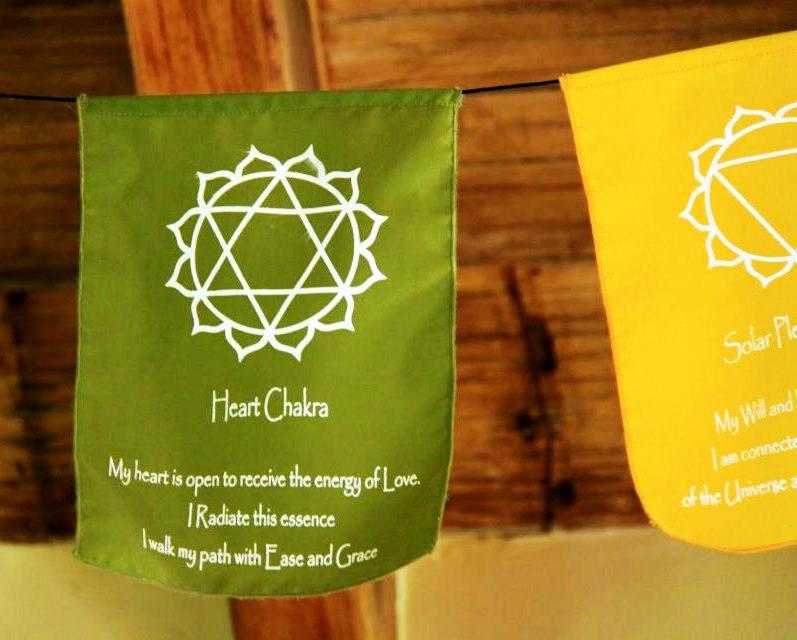
Chakra flags in Pranamar Villas' yoga shala on the beach at Santa Teresa
"At Pranamar, I feel like what we're really doing is inviting guests to experience the beauty of life," comments Nancy Goodfellow, Yoga instructor at Pranamar and Susan's daughter. "To get out of our usual routines; to step aside and see this amazing nature around us and the beauty within us – this vital energy that is all around us. Simultaneously, one will experience this deep tranquility and inner peacefulness."
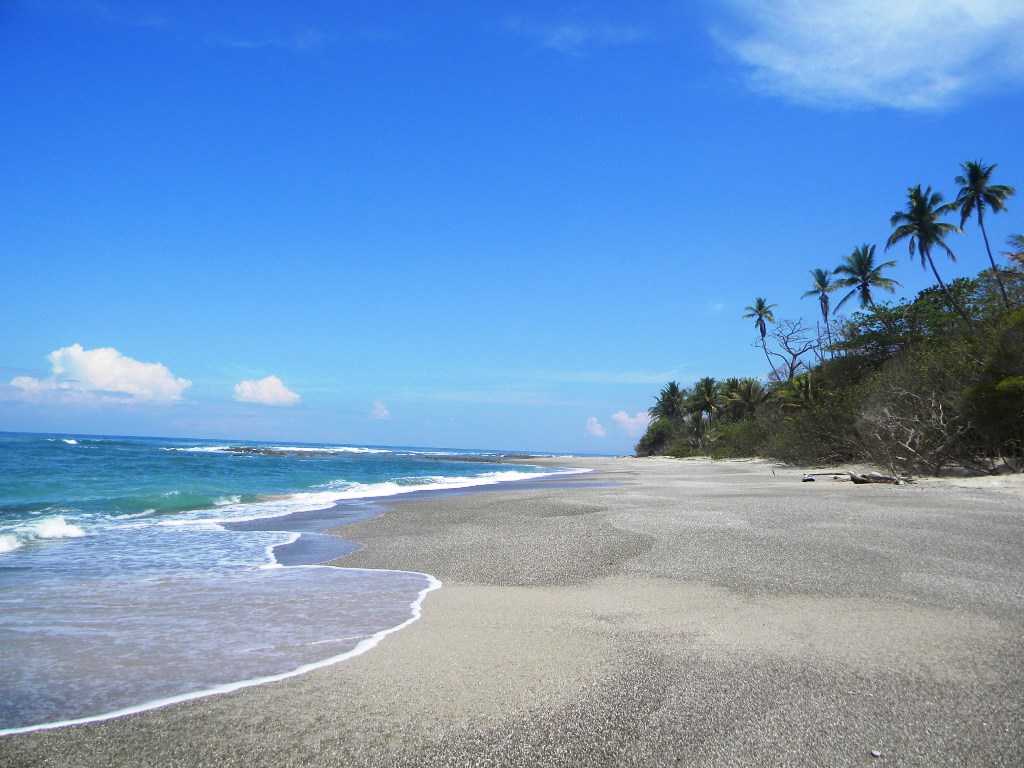
Playa Santa Teresa, Costa Rica
The long tranquil beach of Santa Teresa is nearly perfect with its light beige-white sand shimmering with crushed shells and volcanic sea glass in the sunlight, shady palm and almond trees, and spectacular sunsets. Along with world-class surfing and top-quality Yoga classes, retreats and package vacations, there are numerous activities to do in the area, such as snorkeling, horseback riding, canopy zip line tours and nature tours.
"The memories and friendships established at Pranamar will linger in our collective hearts for a lifetime," notes Susan.
The supreme accomplishment is to blur the line between work and play. Arnold Toynbee
Success is not the key to happiness. Happiness is the key to success. If you love what you are doing, you will be successful. Albert Schweitzer
By Shannon Farley

lunes, 15 de abril de 2013

All you need to know for planning your destination wedding.

Trending in recent years among brides and grooms is leaving behind the traditional, large, 250-person, fancy church, banquet hall wedding in favor of a fun, exotic destination wedding that adds the adventure of a sunny honeymoon vacation.

Couples choose to go out-of-town for many reasons, including basic economics. You would think that staging a wedding in another country would break the bank, but in most cases, only close friends and family attend these celebrations; thus, sparing couples from the large, expensive, traditional wedding receptions back home where everyone up to your long-forgotten Sunday School teacher are invited.
Tropical Occasions wedding in Costa Rica
Destination weddings have become increasingly popular for couples of all types. Costa Rica has become one of the premier locations for destination weddings in the world. The popular wedding website TheKnot.com named Costa Rica in 2012 a top wedding destination in Latin America. TheKnot.com reported that one out of every four destination weddings in Latin America take place in Costa Rica. What’s not to like? You have fabulously gorgeous beaches, lush rainforest, volcanoes, a thriving tourism industry, and an abundance of hotels, resorts and vacation homes available.
A destination wedding is an exciting alternative to a traditional wedding, but a destination wedding requires a lot of planning. Information taken from many sources, including top Costa Rica wedding planner Aimee Monihan, owner of Tropical Occasions and Santa Teresa Beach Weddings, brings you our:
Top 10 list of “Things to Know Before Planning a Destination Wedding”:
Destination weddings can be anywhere / photo by Tropical Occasions 
1. Choose your location carefully. Destination weddings don’t always have to be a beach setting. Choose a mountain, volcano, lake, forest, etc. if beaches aren’t your thing. For instance, Costa Rica has lovely cool climates up at elevated cloud forests.

2. Plan well in advance, especially your airline tickets. Try not to plan a wedding during the country’s busiest times of year when tourism and costs are at their highest, or during national holidays when people do not want to work and businesses are closed. (For Costa Rica, these times are Christmas Week through New Year’s, and Holy week.)
Costa Rica beach destination wedding / photo by Tropical Occasions 
3. Do your weather research. You probably don’t want to have a beach wedding in hurricane season. If it is that country’s rainy season, or if during your wedding month it usually is very windy, or excessively hot, prepare for it so that no matter what, your plans will happen with no issues. When having a beach wedding, make sure to check on the tide times and sunset times for your wedding day so that you can plan properly.

4. Make sure your wedding will be legal, and also valid back home. The nice thing about Costa Rica is that citizens from other countries can get legally married without any residency requirements, blood tests or waiting periods like on many Caribbean islands. In Costa Rica, you can either be legally married in the Catholic Church (following all rules and protocols), or by a civil lawyer. The only downside to doing the legal part of your ceremony in Costa Rica is sometimes very long wait times to have your wedding certificate officially registered, then translated to your home country language, certified by your country’s embassy, and mailed to you. Many brides and grooms handle the legal arrangement in their home country and then enjoy a worry-free spiritual ceremony in Costa Rica that is intimate and personal.
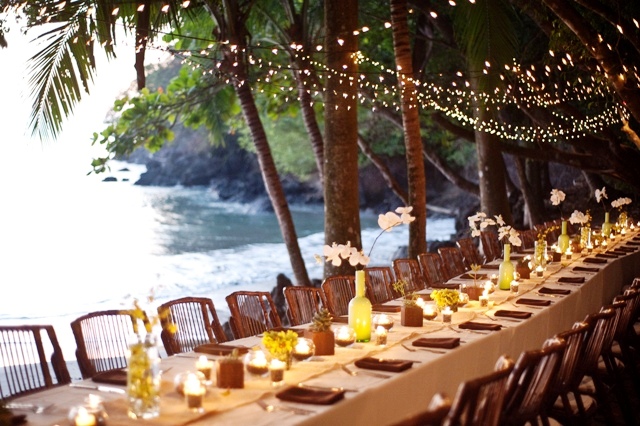
Pranamar Villas wedding at Santa Teresa Beach, Costa Rica 
5. Use reputable vendors. Always check out venues and hotels beyond what you see on a website. Check online reviews, ask to speak with a past bride who was married there, and make sure that all that you are seeing and reading on the website is true to what is shown in the photos and written.

6. Be aware of local laws and cultural customs. Make sure you know what local laws are regarding noise, fire, alcohol, etc. For instance, you may be expecting to dance under the stars all night, when local laws rule that all amplified music must be turned off in open spaces at 10:00 pm. Or, you want to have a bonfire or fireworks, but they are not allowed due to fire bans or environmental restrictions. Keep true to local cuisine; remember you are celebrating your wedding day in another country which may not have access to some of your favorite cuisines.

7. Be helpful to your guests. Give them as much information and travel help as possible, and far in advance. Modern etiquette dictates that couples only need pay for themselves at a destination wedding, so how much and what you pay for is up to you.
Think tropical for a Costa Rica destination wedding / photo by Tropical Occasions 
8. Choose wisely what you and your guests will wear for your destination wedding. Don’t require formal wear at a tropical beach wedding, for instance, or you’ll have very hot and unhappy guests! Get great ideas for destination wedding guest wear and bridal gowns at TLC.

9. Go with the flow. What’s important at the end of the day is that you and your guests had fun and shared love. The “unknown” of holding an important event in another country, another culture and another climate can be stressful, so remembering to relax and enjoy is all-important.
Destination Wedding at Santa Teresa Beach, Costa Rica / photo by Tropical Occasions 
10. Hire a professional wedding planner to avoid that planning stress; they already know the ins and outs of destination weddings. Allow someone with experience and years of knowledge working in that foreign country to help take your ideas, vision and dreams to fruition so you can truly be a guest at your own wedding and live in the moment of every memory being created.

One of Costa Rica’s best destinations for weddings and honeymoons is Santa Teresa Beach on the Pacific’s Nicoya Peninsula. Santa Teresa is the perfect backdrop for a romantic wedding with its wide, light sandy beaches, lush vegetation and spectacular sunsets.
Pranamar Oceanfront Villas & Yoga Retreat, Santa Teresa Beach, Costa Rica
An excellent choice of locations at Santa Teresa Beach is Pranamar Oceanfront Villas & Yoga Retreat, a Trip Advisor Traveler’s Choice Award winner. Pranamar Villas is a gorgeous, intimate oceanfront hotel with luxury two-story villas, beachfront villas and tropical bungalows, all designed in tropical Indonesian architecture. The free-form saltwater pool and tropical gardens add beauty to the eye at every turn.
Pranamar’s on-site wedding and events coordinator can help make your wedding the day you’ve always dreamed of having. From abundant tropical flowers to catered unique food and drinks, they’ll take care of creating an extraordinarily beautiful beach wedding for you. The hotel can sleep 30-35 guests; having the entire property for your party ensures complete privacy.

By Shannon Farley
viernes, 22 de marzo de 2013

Guanacaste paraíso del bosque tropical seco de Costa Rica

¿

Sabe usted dónde se concentra la mayor cantidad de bosque tropical seco de América? Podrá encontrar la respuesta en la provincia de Guanacaste, en Costa Rica. Valga la ocasión para describir grosso modo en qué consiste este tipo de foresta. Se compone de una vegetación que sobrevive con mucho menos agua que el bosque tropical húmedo, pues tiene una temporada seca que se extiende por aproximadamente 8 meses. Sin embargo, esta característica no le resta magnificencia a la flora y fauna que la habita. Eso sí, hubo un tiempo en que esta belleza particular era empañada por la reducción de las áreas de conservación. En vez de preservar las riquezas naturales, los habitantes de la zona utilizaban el espacio como potreros para que el ganado pastase. Ello condujo a un proceso rápido de degradación. Incluso cuando quitaron las reses, el decaimiento de los terrenos continuó. Lo anterior debido a que la hierba jaragua había sido utilizada para alimentar a los animales, pero posteriormente invadió la flora local. Como consecuencia, se convirtió en material inflamable para los incendios de la temporada seca, lo que trajo consigo una mayor reducción de los bosques.
 

Posteriormente, el entomólogo estadounidense Daniel Janzen, quien hacía estudios en la zona, se percató del grado de riqueza de vida silvestre. Asimismo, se dio cuenta de la fragilidad del ecosistema y que, de no ocuparse de su cuidado, se convertiría en un recuerdo para las generaciones venideras.
Fue a partir de este acontecimiento que arrancó la trama del libro «El Fénix Verde», del autor William Allen. En él, un equipo de científicos y voluntarios costarricenses y provenientes del vecino del norte se adentraron en la arena política, ecológica y social del área. El propósito iba más allá de la simple conservación de los bosques sino también la promoción de su recrecimiento. La idea era conectar las pequeñas islas de bosque remanentes y transformarlo en un corredor que replicara la formación original. En un principio el concepto fue considerado como estrafalario pero la osadía de los propulsores acabó sobreponiéndose a la dificultad operativa del proyecto.
El escritor realizó una investigación extensa para recrear la cotidianidad de los personajes principales. De igual manera, se esmeró en el carácter de cada uno de ellos. Así, logró plasmar la manera en que los participantes hicieron a un lado su ego en pro del bien común.


Allen incluyó además, algunos aspectos increíbles sobre la ecoestructura delicada de la zona. Describió con gran detalle cómo las plantas, animales e insectos se vinculan intrínsecamente los unos con los otros. Un elemento descollante es que este proceso se replica en condiciones idénticas tanto en el bosque tropical húmedo como en el seco.El libro es un modelo, un caso de éxito que sirve para analizar la interrogante: ¿se puede prevenir la destrucción de los bosques tropicales del mundo? En las colinas costarricenses heridas por el fuego del verano, el científico y escritor encontró una respuesta maravillosa: no solo es posible es detener la destrucción sino devolverle su riqueza original.

Esta es una historia inspiradora relatada con energía viva. En ella se reflejan imágenes sin igual de playas vírgenes, bosques exuberantes; además del heroísmo y la capacidad de los equipos científicos. Describe el carácter heterodoxo del ecologista Daniel Janzen. En resumen, una obra que todos querrán leer.

Posterior a la lectura, usted deseará vivir en carne propia una experiencia similar. Si lo suyo no es acampar a la intemperie, en el hotel y villas Pranamar le ofrecemos opciones de alojamiento de primer orden. Este es un lugar íntimo ubicado en Santa Teresa, una impresionante playa de arena blanca en el océano Pacífico. Situado en la península de Nicoya, le ofrecen áreas hermosas de natación y todas las comodidades que desee.
¡Atrévase a dominar esa ave fénix indómita que vive en la región!
Por: Andrés Figueroa