Mostrando entradas con la etiqueta Nicoya Peninsula. Mostrar todas las entradas

viernes, 12 de julio de 2013

Research shows massage therapy has extensive health benefits

While massage may have developed a reputation as an indulgence for people who love pampering, studies reveal that it has wide-reaching, evident health benefits, according to an article in the Wall Street Journal.

Massage helps boost immune systemResearch over the past few years has found that massage therapy boosts immune function in women with breast cancer, improves symptoms in children with asthma, and increases grip strength in patients with carpal tunnel syndrome, reports the Wall Street Journal. Other massage therapy benefits include relaxing tight muscles, increasing circulation, aiding in lymphatic drainage, releasing toxins, and reducing stress. It can boost your health and keep you feeling "young" and full of vitality.

According to the American Medical Association, stress is a factor in more than 75% of illnesses today. Visiting a spa or getting a professional massage regularly is an opportunity for the desperately-needed downtime to relax and recharge your mind, body and spirit.

Doctors recommend massage to treat low back painHowever, the benefits of massage go way beyond feelings of relaxation and wellness. The Wall Street Journal notes that the American College of Physicians and the American Pain Society include massage as one of their recommendations for treating low back pain.

Scientific research also is starting to show what happens in the body after a massage. One study, for example, found that a single, 45-minute massage led to a small reduction in the level of cortisol, a stress hormone, in the blood, a decrease in cytokine proteins related to inflammation and allergic reactions, and a boost in white blood cells that fight infection, noted the Wall Street Journal.

"There is emerging evidence that (massage) can make contributions in treating things like pain, where conventional medicine doesn't have all the answers," said Jack Killen, deputy director of the National Center for Complementary and Alternative Medicine in the USA, in the Journal.

Massage helps improve your health and well-beingWith so many things competing for our attention in our fast-paced lives, it's challenging to find the time in our normal schedule to care for ourselves and keep balance. Somehow it seems easy to fall into being tired, stressed, anxious, or exhausted, yet harder to take the time to counteract all of that with something positive like the healing benefits of massage. It truly is amazing what 60 minutes (or 90 minutes, or more, if you can) of making your muscles and body relax can do to improve your health and well-being.

In recent years, health and wellness tourism has increased substantially in Costa Rica. Spa resorts and vacations, yoga classes and yoga retreats, and professional massage are plentiful. While on vacation in Costa Rica, visit Pranamar Oceanfront Villas & Yoga Retreat in Playa Santa Teresa for a healing massage or spa treatment. Pranamar Villas offers a large menu of massages and spa treatments to keep you healthy. From 60 to 90-minute massages using various techniques, to more intense, longer treatments focusing on specific problem areas, Pranamar's spa therapists help you ease into relaxation.

Massage on Santa Teresa Beach at Pranamar Villas in Costa RicaFor instance, there is a focused treatment called "Traveler's Well-being: Re-grounding." The description states: "After many hours of sitting and waiting, irregular meals, new air, water and weather while traveling, your body is in need of rest and relaxation. This treatment will ground you and give you peace through internal organ massage, Reiki, Reflexology and Therapeutic Massage. Your body will thank you!"
Pranamar offers massages, focused treatments, custom treatments and special health packages at their beautiful beachfront resort.

 Following the hotel's commitment to health and the environment, all massage oils and lotions are 100% organic and made in Costa Rica.
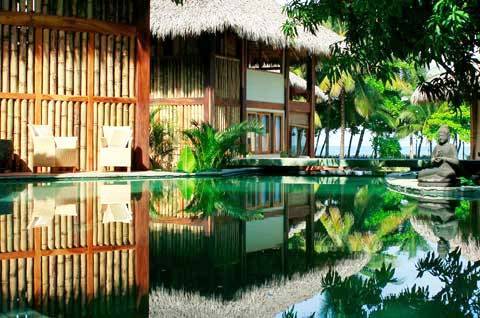
Pranamar Oceanfront Villas & Yoga Retreat, Santa Teresa Beach, Costa RicaThe lovely, intimate, boutique hotel fronts the spectacular beach of Playa Santa Teresa on the southern Nicoya Peninsula of Costa Rica. A TripAdvisor 2013 Certificate of Excellence award winner, Pranamar offers luxurious two-story poolside villas, elaborate oceanfront villas and tropical bungalows, all designed with Indonesian flair and simple elegance. The flowing serpentine saltwater pool and abundant lush tropical gardens lend beauty to the eye at every turn.

There is definitely an uplifting energy at Pranamar. "Prana" in Sanskrit means "vital energy" and "breath", and "mar" means ocean in Spanish. Pranamar Villas offers daily in-house yoga classes, regular yoga retreats and workshops, all-inclusive yoga vacations, and surfing and yoga holidays.
By Shannon Farley

lunes, 13 de mayo de 2013

Are you happy?
Costa Rica is #1 on the Happiest Planet in the world indexThat seems to be the question being asked in recent times, from boardrooms to bars, international conference centers to offices of government leaders, business schools to book stores. Are we happy? Following our bliss? Living our passion? Are we "me-focused" or "others-focused"?

The tiny Himalayan kingdom of Bhutan even measures its country's prosperity by its "gross national happiness" (GNH), measuring the spiritual, physical, social and environmental health and happiness of its citizens and natural environment. Bhutan's policy attracted great interest at the United Nations climate change conference in Doha, Qatar last December.
Costa Rica has made it to #1 on the Happy Planet Index for two years in a row (2012 & 2011), based on its national conservation policies, small ecological footprint, high quality of life and life expectancy rate all being "exceedingly above par", states Forbes Magazine. The Happy Planet Index is an annual survey conducted by the New Economics Foundation, a British think-tank that aims to measure the level of happiness in every country in the world. The ranking system establishes a solid link between happiness and the environment or nature.

Pranamar Oceanfront Villas & Yoga Retreat on Santa Teresa Beach, Costa Rica
Susan Money and Greg Mullins followed their bliss 20 or so years ago to live in harmony with nature in Costa Rica. The California couple first opened a bed and breakfast hotel, then the very successful Florblanca Hotel on Playa Santa Teresa, and now are owners of the highly popular Pranamar Ocean Front Villas and Yoga Retreat, also on Santa Teresa Beach.
"The Pranamar experience is a unique one. Rather than the typical corporate model, we work under the family model. Pranamar evolved from a sense of oneness – a desire to be in community with people we love and people who simply make us feel good," explains Pranamar owner Susan Money.
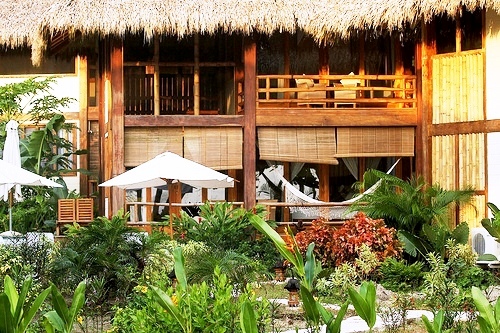
Pranamar's poolside villas on Santa Teresa Beach, Costa Rica
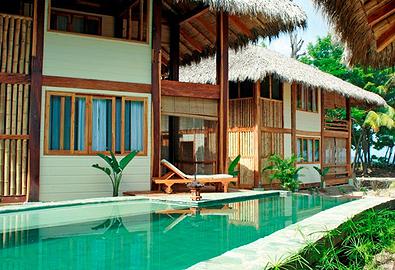
Pranamar Villas is a gorgeous, intimate luxury hotel fronting the spectacular beach of Playa Santa Teresa on the southern Nicoya Peninsula of Costa Rica. A Trip Advisor award winner, Pranamar offers luxurious two-story poolside villas, elaborate oceanfront villas and tropical bungalows, all designed with Indonesian flair. Pranamar evolved from the Susan and Greg's experience of living in the Indonesian island-paradise of Bali. They loved living alongside a river where neighbors gathered in community. In that image, they created the four poolside villas alongside the "river" of their winding saltwater pool, along with abundant lush tropical gardens throughout the property. A hidden statue here and there, shells and rocks artistically placed in the pathways, all lend beauty to the eye at every turn.
The hotel's name shows the owners' passion in what they do. "Prana" in Sanskrit means "vital energy" and "breath". "Mar" means ocean in Spanish. There is definitely an uplifting energy at Pranamar.
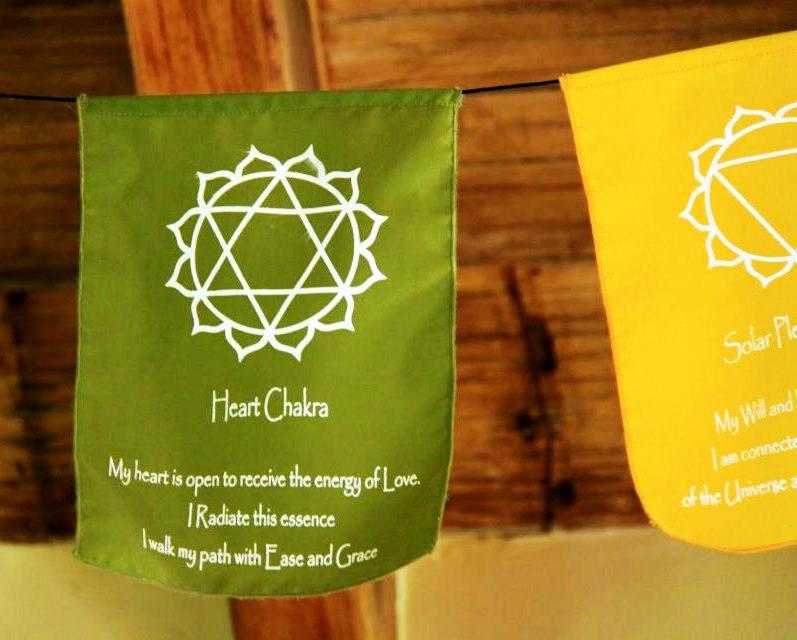
Chakra flags in Pranamar Villas' yoga shala on the beach at Santa Teresa
"At Pranamar, I feel like what we're really doing is inviting guests to experience the beauty of life," comments Nancy Goodfellow, Yoga instructor at Pranamar and Susan's daughter. "To get out of our usual routines; to step aside and see this amazing nature around us and the beauty within us – this vital energy that is all around us. Simultaneously, one will experience this deep tranquility and inner peacefulness."
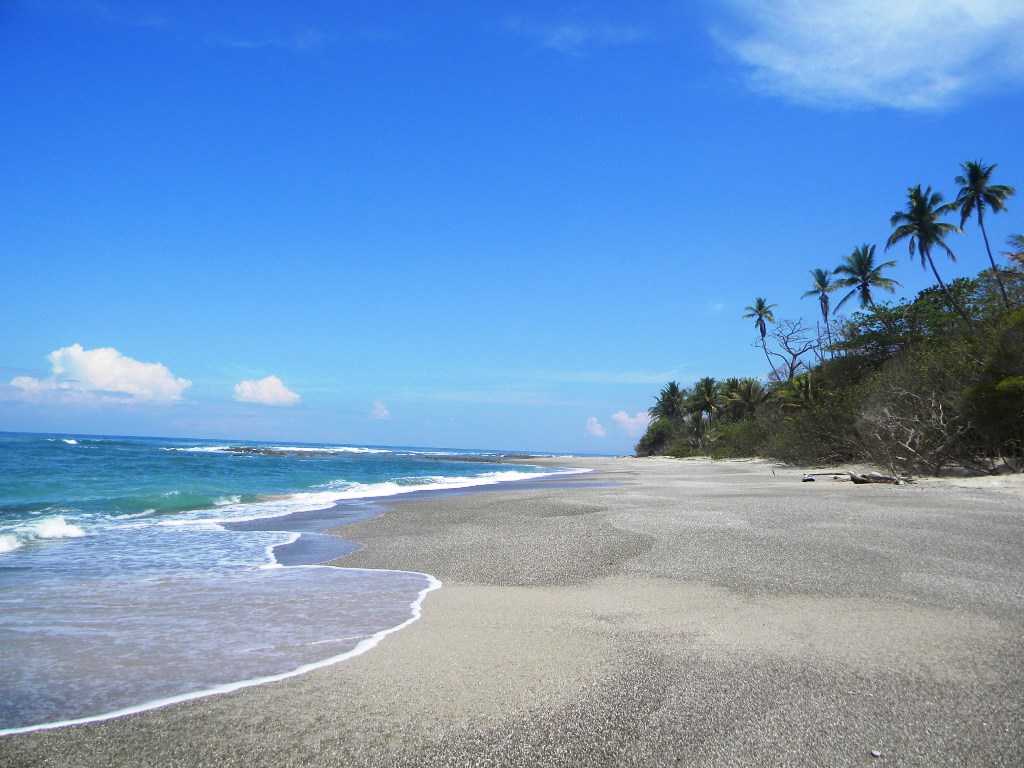
Playa Santa Teresa, Costa Rica
The long tranquil beach of Santa Teresa is nearly perfect with its light beige-white sand shimmering with crushed shells and volcanic sea glass in the sunlight, shady palm and almond trees, and spectacular sunsets. Along with world-class surfing and top-quality Yoga classes, retreats and package vacations, there are numerous activities to do in the area, such as snorkeling, horseback riding, canopy zip line tours and nature tours.
"The memories and friendships established at Pranamar will linger in our collective hearts for a lifetime," notes Susan.
The supreme accomplishment is to blur the line between work and play. Arnold Toynbee
Success is not the key to happiness. Happiness is the key to success. If you love what you are doing, you will be successful. Albert Schweitzer
By Shannon Farley

martes, 19 de marzo de 2013

Uncover the Rich Indigenous History of Costa Rica

Visitors to Costa Rica’s northwest Guanacaste region probably don’t realize the area was once a thriving community for the indigenous Chorotega tribe. Indigenous history and traditions maintain a low profile in the Central American country, yet if you look closely they are all around you.

Spreading across Costa Rica’s entire northern Pacific zone, Guanacaste, for instance, is called the “Chorotega region” after its original inhabitants. The Nicoya Peninsula is named for a Chorotega chief who ruled the area when the Spanish conquistadors arrived in Costa Rica in 1523.

At the time of the Spanish conquest, the Chorotega were the largest and most technologically advanced tribe in Costa Rica, according to Encyclopedia Britannica and other historical reports. The tribe, whose name means “people surrounded by enemies”, were driven by warfare from Central Mexico many generations before the Spanish arrived and settled in southern Nicaragua, Guanacaste and the Nicoya Peninsula.
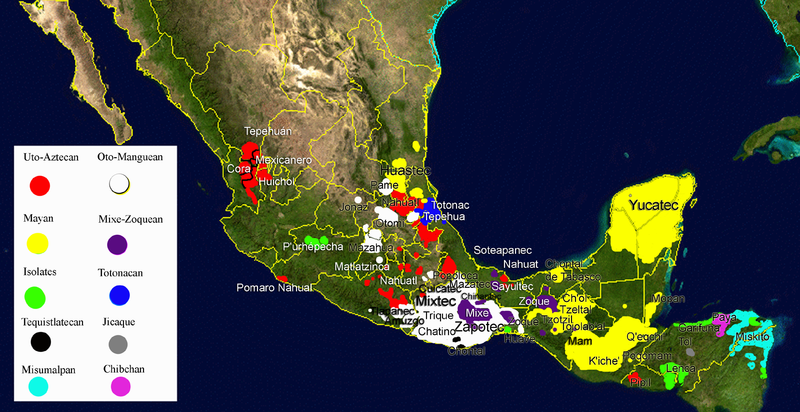
Mesoamerican languages in Central America

They spoke Mangue, an Oto-Manguean language from Central Mexico that was shared by indigenous groups in Honduras, Nicaragua and Costa Rica. Many of the place names in northwest Costa Rica are Chorotegan, including Guanacaste – name of the northern Pacific province and Costa Rica’s national tree. The word “Guanacaste” means “ear tree” for the trees’ seeds which resemble a human ear.
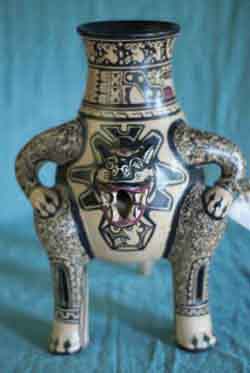
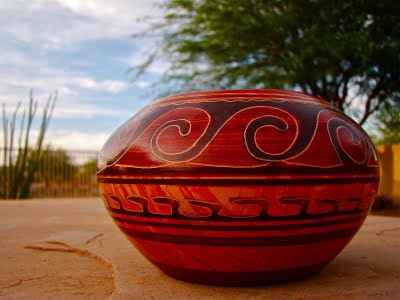
Traditional Chorotega pottery in Costa Rica reveals Aztec historical influences
Stretching all the way from the Nicaraguan border in the north through the Nicoya Peninsula, the Chorotega people lived in towns – some as large as 20,000 inhabitants – that were built around a central plaza, according to historical reports. Their houses were rectangular, built of wood with straw roofs. The Chorotega maintained strong religious rituals and were competent astronomers and mathematicians.

Corn was vitally important in the Chorotega culture, and affected the indigenous people’s agriculture, customs, artistic forms and religious beliefs, reports the Encyclopedia Britannica. Corn was the basis of their diet, along with beans, squash, cacao, meat and fish. The Chorotega had an active economic life with commerce and markets, and a semi-democratic social structure in which chiefs were elected. Cacao beans served as currency.

The Chorotega frequently fought with neighboring peoples, states the Encyclopedia Britannica. Tribal warriors wore padded cotton armor and fought with bows and arrows and wooden swords tipped with small flint knives. Although they were eventually conquered by the Spanish, the Chorotega were reported to be courageous warriors who fought hard against the invaders.
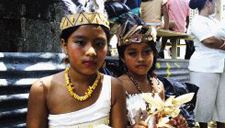
Children of the Chorotega indigenous tribe in Costa Rica

The history of indigenous peoples in Costa Rica is much like the rest of the Americas. The Europeans brought diseases to which the native population had no immunity; entire tribes were killed. Archaeologists calculate that up to 400,000 native people lived in Costa Rica when Columbus arrived in 1502, between the main tribes of the Chorotega, Guaymi (Ngabe), Terraba, Boruca, Maleku, Huetares, Bribri and Cabecar. Ultimately, it was the 16th century slave trade that decimated the Chorotegas. The Spanish rulers dominated the tribe by sending thousands to work in the gold mines of Panama and Peru.
Chorotega pottery from the Nicoya Peninsula is famous in Costa Rica

Today, there are only about 64,000 indigenous people living in Costa Rica, according to official reports. The Chorotega language, culture and community have been largely lost, except for the indigenous reserve of Matambú, located near the town of Nicoya. Some customs and traditions have survived, such as the production of ceramic pottery and figurines. Chorotegan pottery is famous in Costa Rica, and is still being made in the towns of Guaitil and San Vicente.
Pranamar Oceanfront Villas and Yoga Retreat in Santa Teresa, Costa Rica 

Visit Costa Rica’s Nicoya Peninsula and the fascinating land of the Chorotega people when you stay at Pranamar Oceanfront Villas and Yoga Retreat in Santa Teresa. The beautiful, luxury boutique hotel is located right on the Pacific Ocean at Santa Teresa Beach. Two-story poolside villas and elaborate beachfront bungalows are set in extravagant tropical gardens near a lovely free-form saltwater pool. Winner of Trip Advisor’s Traveler’s Choice and Certificate of Excellence awards, Pranamar Villas offers you daily in-house yoga classes, regular yoga retreats and workshops, all-inclusive yoga vacations, front-yard surfing, and surfing and yoga holidays.
By Shannon Farley

miércoles, 13 de febrero de 2013

Find unique Costa Rica souvenirs at Pranamar Oceanfront Villas

One of the joys of traveling is picking up that little something special to bring back home. A unique gift from a unique place that will remind you months and years later of the fun trip you enjoyed.

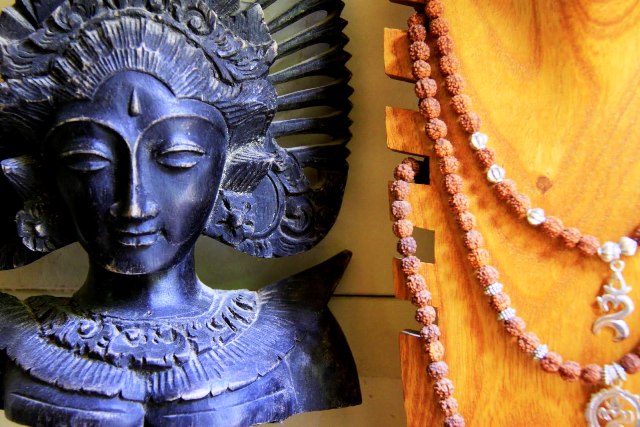
Beads from Bali are a unique item in Pranamar Villas' gift shop in Costa Rica

In the case of world traveler Susan Money, owner of Costa Rica’s Pranamar Oceanfront Villas and Yoga Retreat, all of her treasures from international globetrotting are specifically brought back home to delight other travelers, in the Santa Teresa Beach hotel’s gift shop. The small gift shop in Pranamar Villas’ Reception area features exclusive and uncommon gifts both from Costa Rica and parts further afield.

“One of the great joys of owning a hotel is the fun of shopping for the gift shop,” says Money. “Although our store is very small, it often has some unusual items from my travels around the world. When I’m off traveling, I get to tell my husband that I have to shop … for the gift shop. And what can he say?!”

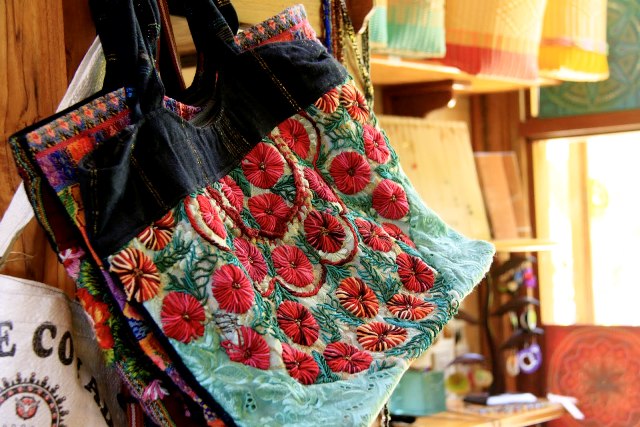
Hand-sewn bags from Guatemala are a lovely gift item in Pranamar Villas' gift shop

Whether originally from Indonesia, Guatemala, Nicaragua or right at home in Santa Teresa, Costa Rica, Pranamar Villas’ gift shop is a colorful and exotic treasure trove of jewelry, scarves, bags, yoga clothes and mats, and organic beauty and bath products.

Featured Gifts
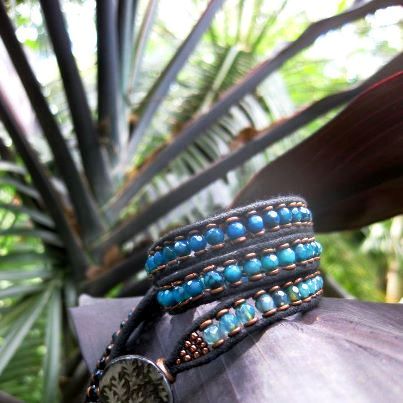
Beautiful wrap bracelets by Phyllis Warman are featured in Pranamar's gift shop

Wrap bracelets
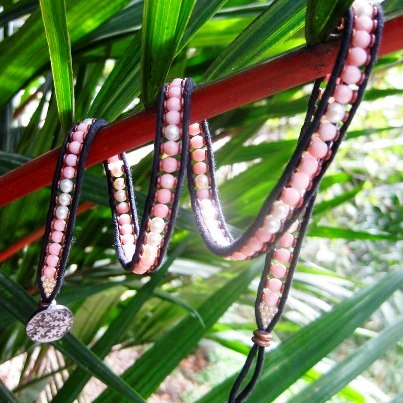
by designer-artist Phyllis Warman are a big hit with Pranamar Villas’ guests. “Inspired by the relaxed lifestyle and shifting colors of Costa Rica's exotic Pacific Coast, the richly majestic landscapes of the Pacific Northwest, and the radiant, sun-drenched beaches of Southern California, Phyllis Warman Jewelry Designs are both casual and sophisticated,” says Warman’s publicity sheet.


Phyllis Warman wrap bracelet inspired by Costa Rica's nature

The Southern California native divides her time between living in Seattle, Washington and Santa Teresa, Costa Rica. Warman makes all of her necklaces, earrings, bracelets and anklets by hand, using natural materials she finds in her environment like mother-of-pearl and abalone shells; freshwater pearls; precious and semi-precious gemstones such as opal, jade, onyx, garnet and turquoise; metals of copper, brass and sterling silver; and 100% pure cotton cord.


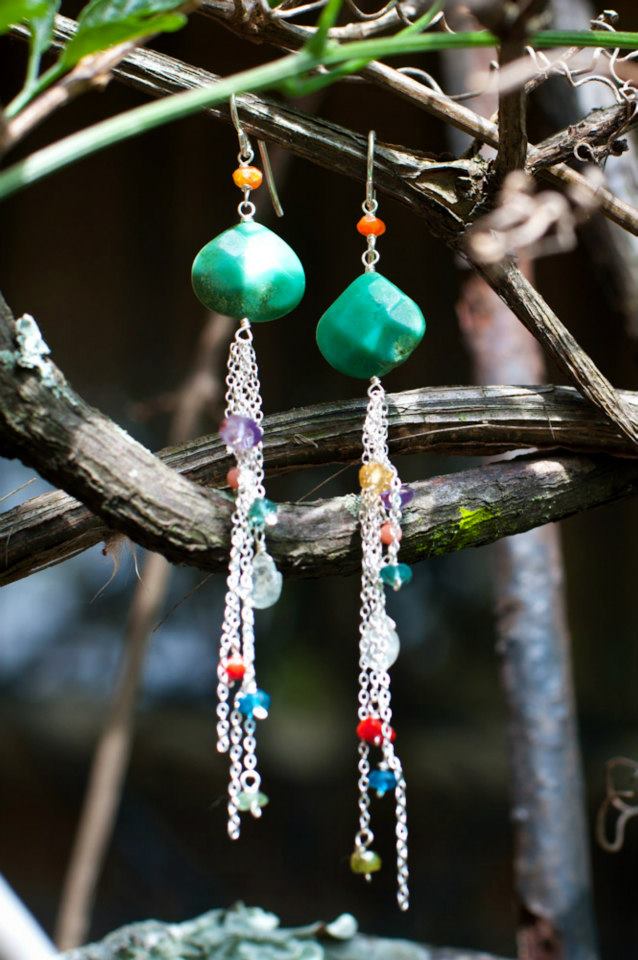
Elegant earrings by Faery Dust Workshop on sale at Pranamar Villas' gift shop

Earrings
and other elegant jewelry from Faery Dust Workshop are very popular gift purchases from Pranamar Villas’ shop, says hotel administrator Larissa Chevalier. Made by a Costa Rican designer living at Playa Santa Teresa, all jewelry is hand-made.

Santa Teresa designer Une a Une's necklaces are sold at Pranamar Villas

Local Santa Teresa Beach resident, Rachel of Une a Une designs, brings her native French flair to her fashionable jewelry creations. After making Costa Rica her home for 10 years, you can see the influence of the tropics’ bright colors in Une a Une’s necklaces, earrings, bracelets and anklets. Une a Une’s delicate necklaces are sold in Pranamar Villas’ gift shop.

Pranamar Oceanfront Villas and Yoga Retreat, Santa Teresa

The gift shop at Pranamar Oceanfront Villas and Yoga Retreat is open to guests and the public in the hotel’s Reception area.
Pranamar Oceanfront Villas & Yoga Retreat luxury boutique hotel in Costa Rica

Pranamar Oceanfront Villas and Yoga Retreat
resort is located right on the Pacific Ocean at Santa Teresa Beach on Costa Rica’s Nicoya Peninsula. The gorgeous, luxury boutique hotel features two-story poolside villas and elaborate beachfront bungalows, set in extravagant tropical gardens near the most lovely free-form saltwater pool. Winner of Trip Advisor’s Traveler’s Choice and Certificate of Excellence awards, Pranamar Villas offers you daily in-house yoga classes, regular yoga retreats and workshops, all-inclusive yoga vacations, front-yard surfing, and surfing and yoga holidays.

By Shannon Farley
miércoles, 9 de enero de 2013

If you want to live for along time, live in Nicoya Peninsula!

What is a “Blue Zone,” It is a place where people live happily and healthily for a very long time. The term was popularized by author-educator-explorer Dan Buettner in his 2008 book, “The Blue Zones: Lessons for Living Longer from People Who’ve Lived the Longest.” Published by the National Geographic Society, Buettner identified places in the world there is a high concentration of persons over age 100, and there is a substantial disability-free and disease-free life expectancy.

Why are they called “Blue Zones”? The name comes from a 2004 demographic study called “Identification of a Geographic Area Characterized by Extreme Longevity in the Sardinia Island: the AKEA study” (Experimental Gerontology by Gianni Pes and Michel Poulain, among other authors). The study identified Sardinia’s Barbagia region as an area with a very high concentration of men over age 100. As the authors discovered more clusters of long longevity in the world, they began drawing blue circles around them on maps, referring to the areas as “Blue Zones.” To my delight, Costa Rica has its own Blue Zone – the Nicoya Peninsula! According to Buettner’s studies, the Nicoya Peninsula has the world’s lowest rates of middle-age mortality and the second highest convergence of male centenarians. Costa Rica indeed does celebrate its elderly citizens; every person who has a 100th birthday is featured on the national news. As of June 2012, our tiny country reported 417 citizens over the age of 100; the country’s official population is more or less 4.5 million. Costa Rican Photographer Mónica Quesada is creating a book and video documenting Ticos who have lived a century. More information at www.indiegogo.com/CRCentenarians. Buettner’s research with National Geographic also turned up longevity hotspots in Okinawa, Japan; the Aegean island of Ikaria, Greece; a Seventh Day Adventist community in Loma Linda, California; and we already know about the mountainous Barbagia region of inner Sardinia, off the western coast of Italy. So what’s the secret? Buettner’s team of researchers and specialists found interesting similarities among the Nicoyan centenarians that are common characteristics in all of the other Blue Zones:

  • Have a “plan de vida,” or reason to live; it also can be called “why I get up in the morning”. Centenarians say they feel needed, with a sense of purpose that often centers on their family.
  •  Focus on your family and friends. Having a good relationship with their family and maintaining a strong social network contributes greatly to centenarians’ sense of purpose and well-being. People of all ages are socially active and integrated into their communities.
  • Have Faith. The Nicoyans’ strong belief in God and their “faith routines” help relieve stress and anxiety. Almost all of the centenarians interviewed around the world for Buettner’s book belonged to a faith-based community of some form.
  • Work hard. Nicoyan centenarians maintain a strong work ethic, which keeps them active and healthy while contributing to their sense of purpose. Moderate physical activity is a normal part of daily life – walking, bicycling, gardening, cooking, keeping up the house, taking care of animals, etc.
  • Drink hard water. High amounts of calcium and magnesium, essential for bone and muscle strength, abound in Nicoya’s water. By drinking and cooking with this water, people here get their daily intake of calcium throughout their entire lives.
  • Healthy diet. Most of the various Blue Zone residents in the world eat a primarily plant-based diet, especially legumes (all kinds of beans, peas and lentils). They also eat rich, colorful fruits – in Nicoya, they eat marañon, the red-orange cashew tree fruit that has more vitamin C than oranges, and noni, a pear-like fruit rich in antioxidants. Nicoyans eat their biggest meal during the day and their smallest meal at night. Japanese centenarians have a rule to eat only until their stomachs are 80% full to avoid being “overstuffed.”
  • Get some sun. Nicoyans enjoy healthy doses of daily sun, enriching their bodies with Vitamin D. Getting at least 15 minutes every day can decrease the risk for osteoporosis and heart disease, experts say.
  • Get Sleep. Nicoyans sleep an average of 8 hours per day. They more or less go to sleep soon after nightfall and wake with the sun.
  • No smoking. Smoking is not common in Blue Zone communities.