Santa Teresa Beach is custom-built for fun. You have the perfect
combination of relaxing beaches, exciting tropical rainforest and
luxurious accommodations and spas. White sand beaches, lush vegetation
and spectacular sunsets set an amazing stage for your romantic holiday.
Pranamar Oceanfront Villas & Yoga Retreat, is a winner of the 2012
Trip Advisor Traveler’s Choice Award. Pranamar Villas is a gorgeous,
intimate boutique hotel right on the water with luxury two-story villas
built around a free-form saltwater pool and tropical gardens, and
elaborate beachfront villas. Picture Balinese architecture with bamboo,
hardwoods, stone, water and plenty of windows and doors to let in fresh
sea breezes.

jueves, 23 de mayo de 2013

lunes, 20 de mayo de 2013
El cambio climatico y sus efectos en la flora y fauna
- Alrededor del 75% de las plantas y el 50% de los animales podrían verse afectados durante los próximos 100 años.
- Los humanos no serán inmunes ante las consecuencias pues el agua y el aire también se verán afectados.
- Una intervención rápida puede aplacar el impacto hasta en un 60%.
Aproximadamente el 75% de las plantas y el 50% de los animales podrían enfrentar una mengua sin precedentes durante este siglo como producto del cambio climático. Esto se extrae de una investigación de la Universidad de East Anglia (UEA) en Norwich, Norfolk (Reino Unido). Los resultados se publicaron el domingo pasado en la revista Nature Climate Change.
 Estudio consideró 50.000 tipos de plantas y animales. Se determinó que dos tercios de los vegetales y la mitad de las bestias perderán su hábitat climático para el 2080 si no se toman medidas para mitigar los efectos y velocidad del calentamiento global. En otras palabras, la distribución geográfica de la biodiversidad bajará en todo mundo.
Según esos cálculos, el mayor riesgo es para las plantas, reptiles y anfibios. Asimismo, zonas como el África subsahariana, América Central, Amazonia y Australia verán mermar sus especies. Mientras tanto, Asia Central, Europa del Este y el Norte de África experimentarán una disminución de plantas sin igual.
No obstante, una actuación veloz para amortiguar el cambio climático podría significar la reducción de pérdidas en un 60%. De ser así, habría 40 años más para que las especies se adaptaran. De tal forma, la temperatura mundial subiría solo 2° C para el 2100 respecto a tiempos preindustriales (1765).
Estudio consideró 50.000 tipos de plantas y animales. Se determinó que dos tercios de los vegetales y la mitad de las bestias perderán su hábitat climático para el 2080 si no se toman medidas para mitigar los efectos y velocidad del calentamiento global. En otras palabras, la distribución geográfica de la biodiversidad bajará en todo mundo.
Según esos cálculos, el mayor riesgo es para las plantas, reptiles y anfibios. Asimismo, zonas como el África subsahariana, América Central, Amazonia y Australia verán mermar sus especies. Mientras tanto, Asia Central, Europa del Este y el Norte de África experimentarán una disminución de plantas sin igual.
No obstante, una actuación veloz para amortiguar el cambio climático podría significar la reducción de pérdidas en un 60%. De ser así, habría 40 años más para que las especies se adaptaran. De tal forma, la temperatura mundial subiría solo 2° C para el 2100 respecto a tiempos preindustriales (1765).
Por su parte, el estudio fue financiado por el Consejo de Investigación del Medio Ambiente Natural (NERC). A su vez, estuvo a cargo de la doctora Rachel Warren de la Escuela de Ciencias del Medio Ambiente y el Centro Tyndall para la Investigación del Cambio Climático de la UEA.
Contó con el apoyo de Jeremy Vanderwal, de la Universidad James Cook (Australia); y de Jeff Price, también miembro de la UEA.
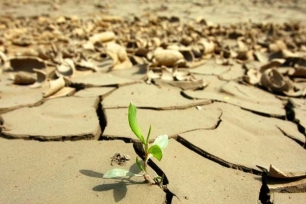 Según la directora, «se sabía poco acerca de cómo el aumento de la temperatura global afectaría las especies más comunes». Y agregó: «el tema más amplio de la pérdida potencial de especies de amplia distribución es un problema grave, ya que incluso pequeñas reducciones en estas pueden alterar de manera significativa los ecosistemas».
Pérdidas enormes en la biosfera. Warren explicó cómo se puede inferir mediante sus pesquisas que las especies más comunes se encuentran en peligro. «Esta pérdida de biodiversidad a escala global empobrecería considerablemente la biosfera y los servicios ecosistémicos que proporciona». Como consecuencia, se volverán más comunes y extremos algunos fenómenos que hoy son más bien esporádicos, como plagas y enfermedades. La científica advirtió, empero, que las estimaciones del equipo fueron «probablemente conservadoras».
«Los animales en particular pueden disminuir más que nuestras predicciones por una pérdida de los alimentos de las plantas», alertó la doctora Warren.
Según la directora, «se sabía poco acerca de cómo el aumento de la temperatura global afectaría las especies más comunes». Y agregó: «el tema más amplio de la pérdida potencial de especies de amplia distribución es un problema grave, ya que incluso pequeñas reducciones en estas pueden alterar de manera significativa los ecosistemas».
Pérdidas enormes en la biosfera. Warren explicó cómo se puede inferir mediante sus pesquisas que las especies más comunes se encuentran en peligro. «Esta pérdida de biodiversidad a escala global empobrecería considerablemente la biosfera y los servicios ecosistémicos que proporciona». Como consecuencia, se volverán más comunes y extremos algunos fenómenos que hoy son más bien esporádicos, como plagas y enfermedades. La científica advirtió, empero, que las estimaciones del equipo fueron «probablemente conservadoras».
«Los animales en particular pueden disminuir más que nuestras predicciones por una pérdida de los alimentos de las plantas», alertó la doctora Warren.Hizo hincapié en el círculo vicioso que también traerá consecuencias importantes para la humanidad. Destacó situaciones relacionadas con la purificación del aire; la calidad del agua y el control de las inundaciones; el ciclo de nutrientes y el ecoturismo. Pero el panorama no es del todo gris. El estudio trae consigo nuevas evidencias decisivas sobre cómo se pueden reducir rápidamente los gases del efecto invernadero. Estas medidas pueden retardar enormemente la pérdida de la biodiversidad, puesto que reducen el importe del calentamiento global de 4° C a 2° C. Dicha ventana de oportunidad permitiría que hubiera 4 décadas de tiempo para que la biodiversidad se adaptase a estas transformaciones de temperatura.
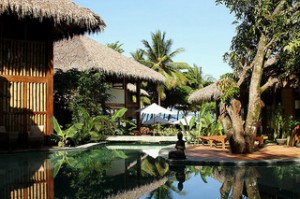 De actuarse a tiempo, las pérdidas de los hábitats climáticos podrían reducirse hasta en un 60%. Por eso es vital que haya un aporte generalizado para el beneficio del medio ambiente. En ese sentido, existen diversas iniciativas públicas y privadas en pro de la conservación. Por ejemplo, el hotel y villas Pranamar (Santa Teresa, Puntarenas) ha sido, desde sus inicios, un lugar dedicado a la relajación y el descanso en armonía con la naturaleza.
El centro turístico se toma muy en serio el tema de la huella ecológica, por lo que ha implementado diversos programas como el reciclaje de aguas residuales, el uso de jabones biodegradables; piscina libre de químicos y el empleo de bombillas y electrodomésticos de bajo consumo.
De actuarse a tiempo, las pérdidas de los hábitats climáticos podrían reducirse hasta en un 60%. Por eso es vital que haya un aporte generalizado para el beneficio del medio ambiente. En ese sentido, existen diversas iniciativas públicas y privadas en pro de la conservación. Por ejemplo, el hotel y villas Pranamar (Santa Teresa, Puntarenas) ha sido, desde sus inicios, un lugar dedicado a la relajación y el descanso en armonía con la naturaleza.
El centro turístico se toma muy en serio el tema de la huella ecológica, por lo que ha implementado diversos programas como el reciclaje de aguas residuales, el uso de jabones biodegradables; piscina libre de químicos y el empleo de bombillas y electrodomésticos de bajo consumo.
Por: Andrés Figueroa Vásquez y agencia Europa Press.
lunes, 13 de mayo de 2013
Are you happy?
 That seems to be the question being asked in recent times, from boardrooms to bars, international conference centers to offices of government leaders, business schools to book stores. Are we happy? Following our bliss? Living our passion? Are we "me-focused" or "others-focused"?
The tiny Himalayan kingdom of Bhutan even measures its country's prosperity by its "gross national happiness" (GNH), measuring the spiritual, physical, social and environmental health and happiness of its citizens and natural environment. Bhutan's policy attracted great interest at the United Nations climate change conference in Doha, Qatar last December.
Costa Rica has made it to #1 on the Happy Planet Index for two years in a row (2012 & 2011), based on its national conservation policies, small ecological footprint, high quality of life and life expectancy rate all being "exceedingly above par", states Forbes Magazine. The Happy Planet Index is an annual survey conducted by the New Economics Foundation, a British think-tank that aims to measure the level of happiness in every country in the world. The ranking system establishes a solid link between happiness and the environment or nature.

Susan Money and Greg Mullins followed their bliss 20 or so years ago to live in harmony with nature in Costa Rica. The California couple first opened a bed and breakfast hotel, then the very successful Florblanca Hotel on Playa Santa Teresa, and now are owners of the highly popular Pranamar Ocean Front Villas and Yoga Retreat, also on Santa Teresa Beach.
"The Pranamar experience is a unique one. Rather than the typical corporate model, we work under the family model. Pranamar evolved from a sense of oneness – a desire to be in community with people we love and people who simply make us feel good," explains Pranamar owner Susan Money.
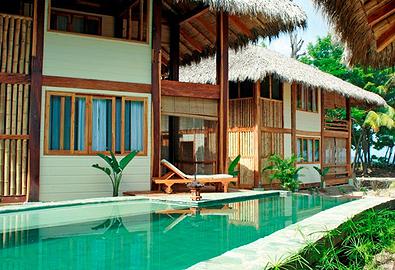
Pranamar Villas is a gorgeous, intimate luxury hotel fronting the spectacular beach of Playa Santa Teresa on the southern Nicoya Peninsula of Costa Rica. A Trip Advisor award winner, Pranamar offers luxurious two-story poolside villas, elaborate oceanfront villas and tropical bungalows, all designed with Indonesian flair. Pranamar evolved from the Susan and Greg's experience of living in the Indonesian island-paradise of Bali. They loved living alongside a river where neighbors gathered in community. In that image, they created the four poolside villas alongside the "river" of their winding saltwater pool, along with abundant lush tropical gardens throughout the property. A hidden statue here and there, shells and rocks artistically placed in the pathways, all lend beauty to the eye at every turn.
The hotel's name shows the owners' passion in what they do. "Prana" in Sanskrit means "vital energy" and "breath". "Mar" means ocean in Spanish. There is definitely an uplifting energy at Pranamar.
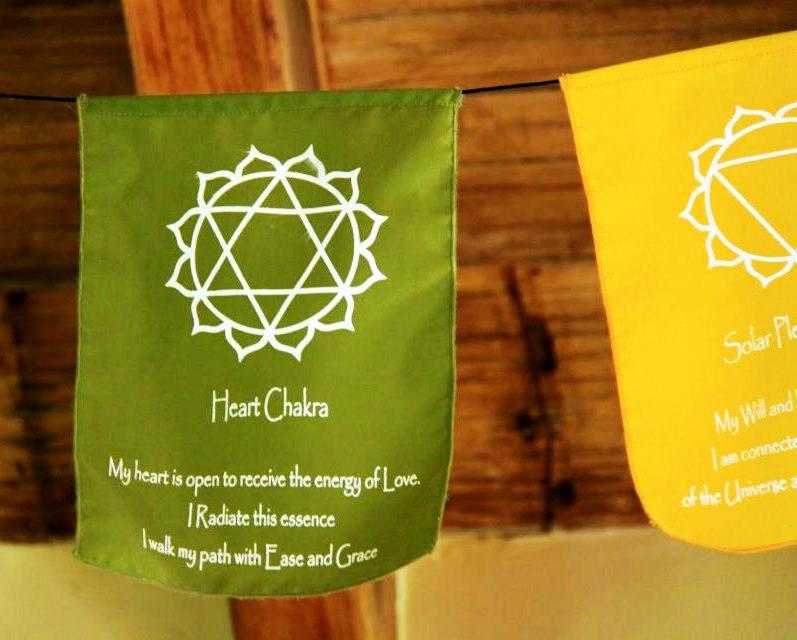
"At Pranamar, I feel like what we're really doing is inviting guests to experience the beauty of life," comments Nancy Goodfellow, Yoga instructor at Pranamar and Susan's daughter. "To get out of our usual routines; to step aside and see this amazing nature around us and the beauty within us – this vital energy that is all around us. Simultaneously, one will experience this deep tranquility and inner peacefulness."
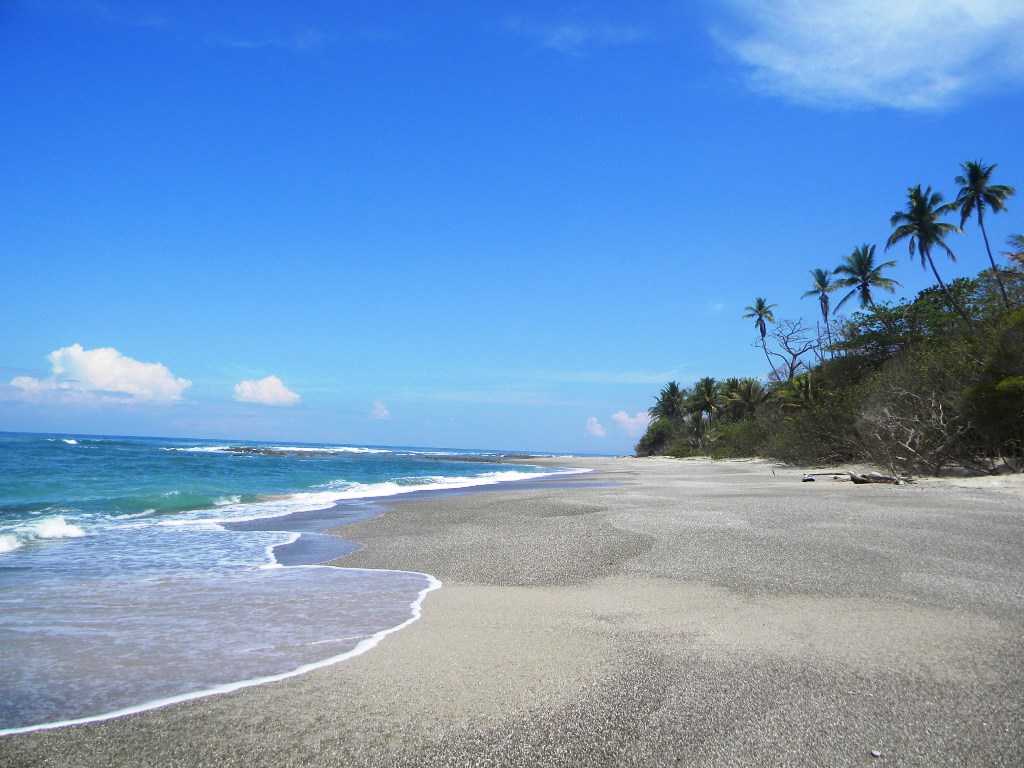
The long tranquil beach of Santa Teresa is nearly perfect with its light beige-white sand shimmering with crushed shells and volcanic sea glass in the sunlight, shady palm and almond trees, and spectacular sunsets. Along with world-class surfing and top-quality Yoga classes, retreats and package vacations, there are numerous activities to do in the area, such as snorkeling, horseback riding, canopy zip line tours and nature tours.
"The memories and friendships established at Pranamar will linger in our collective hearts for a lifetime," notes Susan.
The supreme accomplishment is to blur the line between work and play. Arnold ToynbeeSuccess is not the key to happiness. Happiness is the key to success. If you love what you are doing, you will be successful. Albert Schweitzer
By Shannon Farley
lunes, 15 de abril de 2013
All you need to know for planning your destination wedding.
Trending in recent years among brides and grooms is leaving behind
the traditional, large, 250-person, fancy church, banquet hall wedding
in favor of a fun, exotic destination wedding that adds the adventure of a sunny honeymoon vacation.
Couples choose to go out-of-town for many reasons, including basic economics. You would think that staging a wedding in another country would break the bank, but in most cases, only close friends and family attend these celebrations; thus, sparing couples from the large, expensive, traditional wedding receptions back home where everyone up to your long-forgotten Sunday School teacher are invited.

Destination weddings have become increasingly popular for couples of all types. Costa Rica has become one of the premier locations for destination weddings in the world. The popular wedding website TheKnot.com named Costa Rica in 2012 a top wedding destination in Latin America. TheKnot.com reported that one out of every four destination weddings in Latin America take place in Costa Rica. What’s not to like? You have fabulously gorgeous beaches, lush rainforest, volcanoes, a thriving tourism industry, and an abundance of hotels, resorts and vacation homes available.
A destination wedding is an exciting alternative to a traditional wedding, but a destination wedding requires a lot of planning. Information taken from many sources, including top Costa Rica wedding planner Aimee Monihan, owner of Tropical Occasions and Santa Teresa Beach Weddings, brings you our:
Top 10 list of “Things to Know Before Planning a Destination Wedding”:

1. Choose your location carefully. Destination weddings don’t always have to be a beach setting. Choose a mountain, volcano, lake, forest, etc. if beaches aren’t your thing. For instance, Costa Rica has lovely cool climates up at elevated cloud forests.
2. Plan well in advance, especially your airline tickets. Try not to plan a wedding during the country’s busiest times of year when tourism and costs are at their highest, or during national holidays when people do not want to work and businesses are closed. (For Costa Rica, these times are Christmas Week through New Year’s, and Holy week.)

3. Do your weather research. You probably don’t want to have a beach wedding in hurricane season. If it is that country’s rainy season, or if during your wedding month it usually is very windy, or excessively hot, prepare for it so that no matter what, your plans will happen with no issues. When having a beach wedding, make sure to check on the tide times and sunset times for your wedding day so that you can plan properly.
4. Make sure your wedding will be legal, and also valid back home. The nice thing about Costa Rica is that citizens from other countries can get legally married without any residency requirements, blood tests or waiting periods like on many Caribbean islands. In Costa Rica, you can either be legally married in the Catholic Church (following all rules and protocols), or by a civil lawyer. The only downside to doing the legal part of your ceremony in Costa Rica is sometimes very long wait times to have your wedding certificate officially registered, then translated to your home country language, certified by your country’s embassy, and mailed to you. Many brides and grooms handle the legal arrangement in their home country and then enjoy a worry-free spiritual ceremony in Costa Rica that is intimate and personal.

5. Use reputable vendors. Always check out venues and hotels beyond what you see on a website. Check online reviews, ask to speak with a past bride who was married there, and make sure that all that you are seeing and reading on the website is true to what is shown in the photos and written.
6. Be aware of local laws and cultural customs. Make sure you know what local laws are regarding noise, fire, alcohol, etc. For instance, you may be expecting to dance under the stars all night, when local laws rule that all amplified music must be turned off in open spaces at 10:00 pm. Or, you want to have a bonfire or fireworks, but they are not allowed due to fire bans or environmental restrictions. Keep true to local cuisine; remember you are celebrating your wedding day in another country which may not have access to some of your favorite cuisines.
7. Be helpful to your guests. Give them as much information and travel help as possible, and far in advance. Modern etiquette dictates that couples only need pay for themselves at a destination wedding, so how much and what you pay for is up to you.

8. Choose wisely what you and your guests will wear for your destination wedding. Don’t require formal wear at a tropical beach wedding, for instance, or you’ll have very hot and unhappy guests! Get great ideas for destination wedding guest wear and bridal gowns at TLC.
9. Go with the flow. What’s important at the end of the day is that you and your guests had fun and shared love. The “unknown” of holding an important event in another country, another culture and another climate can be stressful, so remembering to relax and enjoy is all-important.

10. Hire a professional wedding planner to avoid that planning stress; they already know the ins and outs of destination weddings. Allow someone with experience and years of knowledge working in that foreign country to help take your ideas, vision and dreams to fruition so you can truly be a guest at your own wedding and live in the moment of every memory being created.
One of Costa Rica’s best destinations for weddings and honeymoons is Santa Teresa Beach on the Pacific’s Nicoya Peninsula. Santa Teresa is the perfect backdrop for a romantic wedding with its wide, light sandy beaches, lush vegetation and spectacular sunsets.

An excellent choice of locations at Santa Teresa Beach is Pranamar Oceanfront Villas & Yoga Retreat, a Trip Advisor Traveler’s Choice Award winner. Pranamar Villas is a gorgeous, intimate oceanfront hotel with luxury two-story villas, beachfront villas and tropical bungalows, all designed in tropical Indonesian architecture. The free-form saltwater pool and tropical gardens add beauty to the eye at every turn.
Pranamar’s on-site wedding and events coordinator can help make your wedding the day you’ve always dreamed of having. From abundant tropical flowers to catered unique food and drinks, they’ll take care of creating an extraordinarily beautiful beach wedding for you. The hotel can sleep 30-35 guests; having the entire property for your party ensures complete privacy.
By Shannon Farley
Couples choose to go out-of-town for many reasons, including basic economics. You would think that staging a wedding in another country would break the bank, but in most cases, only close friends and family attend these celebrations; thus, sparing couples from the large, expensive, traditional wedding receptions back home where everyone up to your long-forgotten Sunday School teacher are invited.
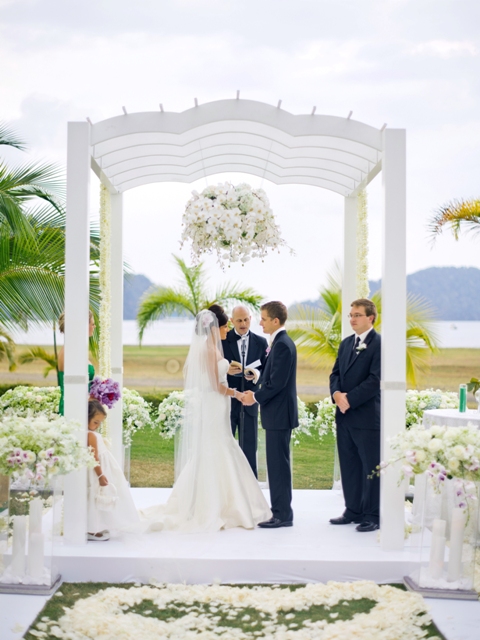
Destination weddings have become increasingly popular for couples of all types. Costa Rica has become one of the premier locations for destination weddings in the world. The popular wedding website TheKnot.com named Costa Rica in 2012 a top wedding destination in Latin America. TheKnot.com reported that one out of every four destination weddings in Latin America take place in Costa Rica. What’s not to like? You have fabulously gorgeous beaches, lush rainforest, volcanoes, a thriving tourism industry, and an abundance of hotels, resorts and vacation homes available.
A destination wedding is an exciting alternative to a traditional wedding, but a destination wedding requires a lot of planning. Information taken from many sources, including top Costa Rica wedding planner Aimee Monihan, owner of Tropical Occasions and Santa Teresa Beach Weddings, brings you our:
Top 10 list of “Things to Know Before Planning a Destination Wedding”:

1. Choose your location carefully. Destination weddings don’t always have to be a beach setting. Choose a mountain, volcano, lake, forest, etc. if beaches aren’t your thing. For instance, Costa Rica has lovely cool climates up at elevated cloud forests.
2. Plan well in advance, especially your airline tickets. Try not to plan a wedding during the country’s busiest times of year when tourism and costs are at their highest, or during national holidays when people do not want to work and businesses are closed. (For Costa Rica, these times are Christmas Week through New Year’s, and Holy week.)
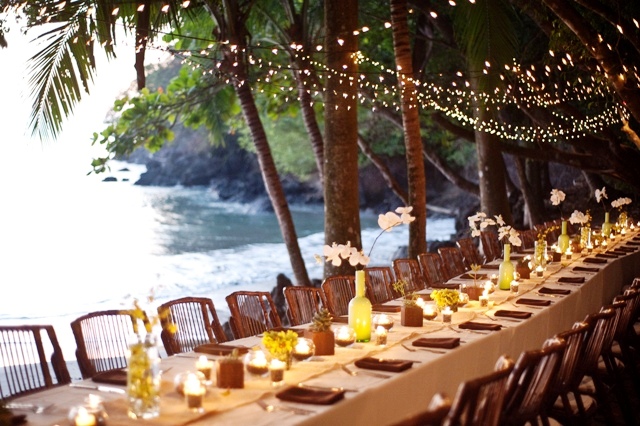
3. Do your weather research. You probably don’t want to have a beach wedding in hurricane season. If it is that country’s rainy season, or if during your wedding month it usually is very windy, or excessively hot, prepare for it so that no matter what, your plans will happen with no issues. When having a beach wedding, make sure to check on the tide times and sunset times for your wedding day so that you can plan properly.
4. Make sure your wedding will be legal, and also valid back home. The nice thing about Costa Rica is that citizens from other countries can get legally married without any residency requirements, blood tests or waiting periods like on many Caribbean islands. In Costa Rica, you can either be legally married in the Catholic Church (following all rules and protocols), or by a civil lawyer. The only downside to doing the legal part of your ceremony in Costa Rica is sometimes very long wait times to have your wedding certificate officially registered, then translated to your home country language, certified by your country’s embassy, and mailed to you. Many brides and grooms handle the legal arrangement in their home country and then enjoy a worry-free spiritual ceremony in Costa Rica that is intimate and personal.

5. Use reputable vendors. Always check out venues and hotels beyond what you see on a website. Check online reviews, ask to speak with a past bride who was married there, and make sure that all that you are seeing and reading on the website is true to what is shown in the photos and written.
6. Be aware of local laws and cultural customs. Make sure you know what local laws are regarding noise, fire, alcohol, etc. For instance, you may be expecting to dance under the stars all night, when local laws rule that all amplified music must be turned off in open spaces at 10:00 pm. Or, you want to have a bonfire or fireworks, but they are not allowed due to fire bans or environmental restrictions. Keep true to local cuisine; remember you are celebrating your wedding day in another country which may not have access to some of your favorite cuisines.
7. Be helpful to your guests. Give them as much information and travel help as possible, and far in advance. Modern etiquette dictates that couples only need pay for themselves at a destination wedding, so how much and what you pay for is up to you.

8. Choose wisely what you and your guests will wear for your destination wedding. Don’t require formal wear at a tropical beach wedding, for instance, or you’ll have very hot and unhappy guests! Get great ideas for destination wedding guest wear and bridal gowns at TLC.
9. Go with the flow. What’s important at the end of the day is that you and your guests had fun and shared love. The “unknown” of holding an important event in another country, another culture and another climate can be stressful, so remembering to relax and enjoy is all-important.

10. Hire a professional wedding planner to avoid that planning stress; they already know the ins and outs of destination weddings. Allow someone with experience and years of knowledge working in that foreign country to help take your ideas, vision and dreams to fruition so you can truly be a guest at your own wedding and live in the moment of every memory being created.
One of Costa Rica’s best destinations for weddings and honeymoons is Santa Teresa Beach on the Pacific’s Nicoya Peninsula. Santa Teresa is the perfect backdrop for a romantic wedding with its wide, light sandy beaches, lush vegetation and spectacular sunsets.
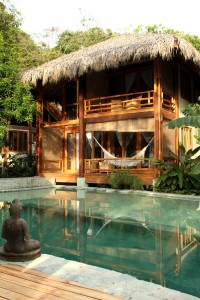
An excellent choice of locations at Santa Teresa Beach is Pranamar Oceanfront Villas & Yoga Retreat, a Trip Advisor Traveler’s Choice Award winner. Pranamar Villas is a gorgeous, intimate oceanfront hotel with luxury two-story villas, beachfront villas and tropical bungalows, all designed in tropical Indonesian architecture. The free-form saltwater pool and tropical gardens add beauty to the eye at every turn.
Pranamar’s on-site wedding and events coordinator can help make your wedding the day you’ve always dreamed of having. From abundant tropical flowers to catered unique food and drinks, they’ll take care of creating an extraordinarily beautiful beach wedding for you. The hotel can sleep 30-35 guests; having the entire property for your party ensures complete privacy.
By Shannon Farley
viernes, 22 de marzo de 2013
Guanacaste paraíso del bosque tropical seco de Costa Rica
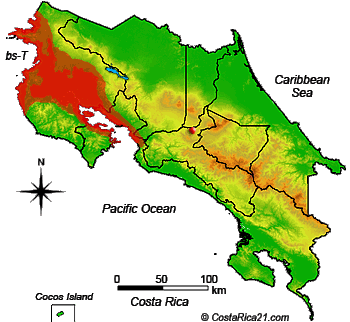 ¿
¿Sabe usted dónde se concentra la mayor cantidad de bosque tropical seco de América? Podrá encontrar la respuesta en la provincia de Guanacaste, en Costa Rica. Valga la ocasión para describir grosso modo en qué consiste este tipo de foresta. Se compone de una vegetación que sobrevive con mucho menos agua que el bosque tropical húmedo, pues tiene una temporada seca que se extiende por aproximadamente 8 meses. Sin embargo, esta característica no le resta magnificencia a la flora y fauna que la habita. Eso sí, hubo un tiempo en que esta belleza particular era empañada por la reducción de las áreas de conservación. En vez de preservar las riquezas naturales, los habitantes de la zona utilizaban el espacio como potreros para que el ganado pastase. Ello condujo a un proceso rápido de degradación. Incluso cuando quitaron las reses, el decaimiento de los terrenos continuó. Lo anterior debido a que la hierba jaragua había sido utilizada para alimentar a los animales, pero posteriormente invadió la flora local. Como consecuencia, se convirtió en material inflamable para los incendios de la temporada seca, lo que trajo consigo una mayor reducción de los bosques.
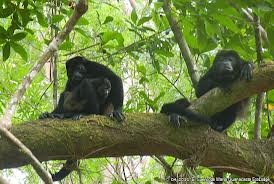
Posteriormente, el entomólogo estadounidense Daniel Janzen,
quien hacía estudios en la zona, se percató del grado de riqueza de
vida silvestre. Asimismo, se dio cuenta de la fragilidad del ecosistema y
que, de no ocuparse de su cuidado, se convertiría en un recuerdo para
las generaciones venideras.
Fue a partir de este acontecimiento que arrancó la trama del libro «El Fénix Verde», del autor William Allen.
En él, un equipo de científicos y voluntarios costarricenses y
provenientes del vecino del norte se adentraron en la arena política,
ecológica y social del área. El propósito iba más allá de la simple
conservación de los bosques sino también la promoción de su
recrecimiento. La idea era conectar las pequeñas islas de bosque
remanentes y transformarlo en un corredor que replicara la formación
original. En un principio el concepto fue considerado como estrafalario
pero la osadía de los propulsores acabó sobreponiéndose a la dificultad
operativa del proyecto.
El
escritor realizó una investigación extensa para recrear la cotidianidad
de los personajes principales. De igual manera, se esmeró en el
carácter de cada uno de ellos. Así, logró plasmar la manera en que los
participantes hicieron a un lado su ego en pro del bien común.
Allen incluyó además, algunos aspectos increíbles sobre la ecoestructura delicada de la zona. Describió con gran detalle cómo las plantas, animales e insectos se vinculan intrínsecamente los unos con los otros. Un elemento descollante es que este proceso se replica en condiciones idénticas tanto en el bosque tropical húmedo como en el seco.El libro es un modelo, un caso de éxito que sirve para analizar la interrogante: ¿se puede prevenir la destrucción de los bosques tropicales del mundo? En las colinas costarricenses heridas por el fuego del verano, el científico y escritor encontró una respuesta maravillosa: no solo es posible es detener la destrucción sino devolverle su riqueza original.
Esta es una historia inspiradora relatada con energía viva. En ella se reflejan imágenes sin igual de playas vírgenes, bosques exuberantes; además del heroísmo y la capacidad de los equipos científicos. Describe el carácter heterodoxo del ecologista Daniel Janzen. En resumen, una obra que todos querrán leer.
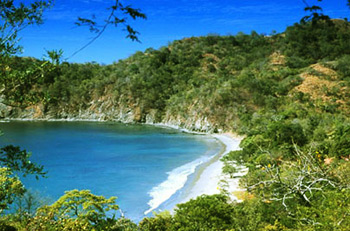
Posterior a la lectura, usted deseará vivir en carne propia una experiencia similar. Si lo suyo no es acampar a la intemperie, en el hotel y villas Pranamar le ofrecemos opciones de alojamiento de primer orden. Este es un lugar íntimo ubicado en Santa Teresa, una impresionante playa de arena blanca en el océano Pacífico. Situado en la península de Nicoya, le ofrecen áreas hermosas de natación y todas las comodidades que desee.
¡Atrévase a dominar esa ave fénix indómita que vive en la región!
Por: Andrés Figueroa
martes, 19 de marzo de 2013
Uncover the Rich Indigenous History of Costa Rica
Visitors to Costa Rica’s northwest Guanacaste region probably don’t realize the area was once a thriving community for the indigenous Chorotega tribe.
Indigenous history and traditions maintain a low profile in the Central
American country, yet if you look closely they are all around you.
Spreading across Costa Rica’s entire northern Pacific zone, Guanacaste, for instance, is called the “Chorotega region” after its original inhabitants. The Nicoya Peninsula is named for a Chorotega chief who ruled the area when the Spanish conquistadors arrived in Costa Rica in 1523.
At the time of the Spanish conquest, the Chorotega were the largest and most technologically advanced tribe in Costa Rica, according to Encyclopedia Britannica and other historical reports. The tribe, whose name means “people surrounded by enemies”, were driven by warfare from Central Mexico many generations before the Spanish arrived and settled in southern Nicaragua, Guanacaste and the Nicoya Peninsula.

They spoke Mangue, an Oto-Manguean language from Central Mexico that was shared by indigenous groups in Honduras, Nicaragua and Costa Rica. Many of the place names in northwest Costa Rica are Chorotegan, including Guanacaste – name of the northern Pacific province and Costa Rica’s national tree. The word “Guanacaste” means “ear tree” for the trees’ seeds which resemble a human ear.

Stretching all the way from the Nicaraguan border in the north through the Nicoya Peninsula, the Chorotega people lived in towns – some as large as 20,000 inhabitants – that were built around a central plaza, according to historical reports. Their houses were rectangular, built of wood with straw roofs. The Chorotega maintained strong religious rituals and were competent astronomers and mathematicians.
Corn was vitally important in the Chorotega culture, and affected the indigenous people’s agriculture, customs, artistic forms and religious beliefs, reports the Encyclopedia Britannica. Corn was the basis of their diet, along with beans, squash, cacao, meat and fish. The Chorotega had an active economic life with commerce and markets, and a semi-democratic social structure in which chiefs were elected. Cacao beans served as currency.
The Chorotega frequently fought with neighboring peoples, states the Encyclopedia Britannica. Tribal warriors wore padded cotton armor and fought with bows and arrows and wooden swords tipped with small flint knives. Although they were eventually conquered by the Spanish, the Chorotega were reported to be courageous warriors who fought hard against the invaders.

The history of indigenous peoples in Costa Rica is much like the rest of the Americas. The Europeans brought diseases to which the native population had no immunity; entire tribes were killed. Archaeologists calculate that up to 400,000 native people lived in Costa Rica when Columbus arrived in 1502, between the main tribes of the Chorotega, Guaymi (Ngabe), Terraba, Boruca, Maleku, Huetares, Bribri and Cabecar. Ultimately, it was the 16th century slave trade that decimated the Chorotegas. The Spanish rulers dominated the tribe by sending thousands to work in the gold mines of Panama and Peru.

Today, there are only about 64,000 indigenous people living in Costa Rica, according to official reports. The Chorotega language, culture and community have been largely lost, except for the indigenous reserve of Matambú, located near the town of Nicoya. Some customs and traditions have survived, such as the production of ceramic pottery and figurines. Chorotegan pottery is famous in Costa Rica, and is still being made in the towns of Guaitil and San Vicente.

Visit Costa Rica’s Nicoya Peninsula and the fascinating land of the Chorotega people when you stay at Pranamar Oceanfront Villas and Yoga Retreat in Santa Teresa. The beautiful, luxury boutique hotel is located right on the Pacific Ocean at Santa Teresa Beach. Two-story poolside villas and elaborate beachfront bungalows are set in extravagant tropical gardens near a lovely free-form saltwater pool. Winner of Trip Advisor’s Traveler’s Choice and Certificate of Excellence awards, Pranamar Villas offers you daily in-house yoga classes, regular yoga retreats and workshops, all-inclusive yoga vacations, front-yard surfing, and surfing and yoga holidays.
By Shannon Farley
Spreading across Costa Rica’s entire northern Pacific zone, Guanacaste, for instance, is called the “Chorotega region” after its original inhabitants. The Nicoya Peninsula is named for a Chorotega chief who ruled the area when the Spanish conquistadors arrived in Costa Rica in 1523.
At the time of the Spanish conquest, the Chorotega were the largest and most technologically advanced tribe in Costa Rica, according to Encyclopedia Britannica and other historical reports. The tribe, whose name means “people surrounded by enemies”, were driven by warfare from Central Mexico many generations before the Spanish arrived and settled in southern Nicaragua, Guanacaste and the Nicoya Peninsula.
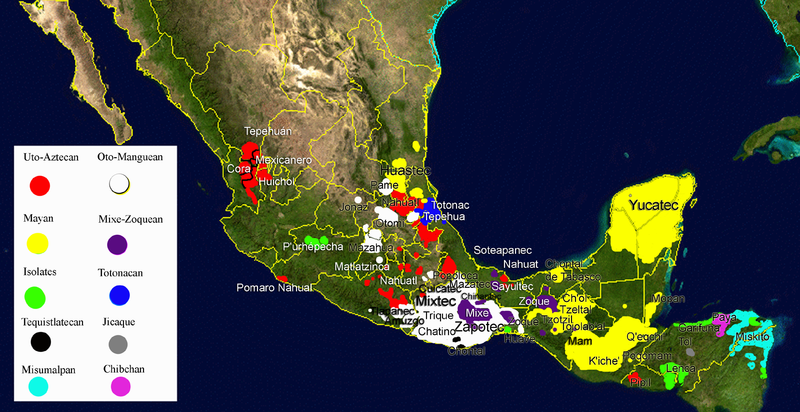
They spoke Mangue, an Oto-Manguean language from Central Mexico that was shared by indigenous groups in Honduras, Nicaragua and Costa Rica. Many of the place names in northwest Costa Rica are Chorotegan, including Guanacaste – name of the northern Pacific province and Costa Rica’s national tree. The word “Guanacaste” means “ear tree” for the trees’ seeds which resemble a human ear.
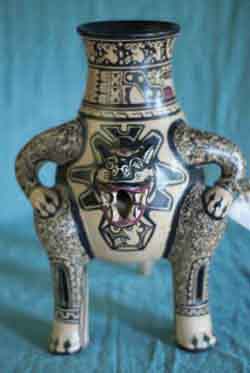
Stretching all the way from the Nicaraguan border in the north through the Nicoya Peninsula, the Chorotega people lived in towns – some as large as 20,000 inhabitants – that were built around a central plaza, according to historical reports. Their houses were rectangular, built of wood with straw roofs. The Chorotega maintained strong religious rituals and were competent astronomers and mathematicians.
Corn was vitally important in the Chorotega culture, and affected the indigenous people’s agriculture, customs, artistic forms and religious beliefs, reports the Encyclopedia Britannica. Corn was the basis of their diet, along with beans, squash, cacao, meat and fish. The Chorotega had an active economic life with commerce and markets, and a semi-democratic social structure in which chiefs were elected. Cacao beans served as currency.
The Chorotega frequently fought with neighboring peoples, states the Encyclopedia Britannica. Tribal warriors wore padded cotton armor and fought with bows and arrows and wooden swords tipped with small flint knives. Although they were eventually conquered by the Spanish, the Chorotega were reported to be courageous warriors who fought hard against the invaders.
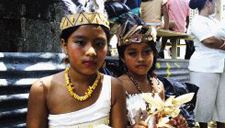
The history of indigenous peoples in Costa Rica is much like the rest of the Americas. The Europeans brought diseases to which the native population had no immunity; entire tribes were killed. Archaeologists calculate that up to 400,000 native people lived in Costa Rica when Columbus arrived in 1502, between the main tribes of the Chorotega, Guaymi (Ngabe), Terraba, Boruca, Maleku, Huetares, Bribri and Cabecar. Ultimately, it was the 16th century slave trade that decimated the Chorotegas. The Spanish rulers dominated the tribe by sending thousands to work in the gold mines of Panama and Peru.
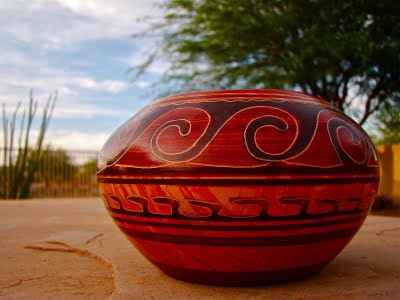
Today, there are only about 64,000 indigenous people living in Costa Rica, according to official reports. The Chorotega language, culture and community have been largely lost, except for the indigenous reserve of Matambú, located near the town of Nicoya. Some customs and traditions have survived, such as the production of ceramic pottery and figurines. Chorotegan pottery is famous in Costa Rica, and is still being made in the towns of Guaitil and San Vicente.
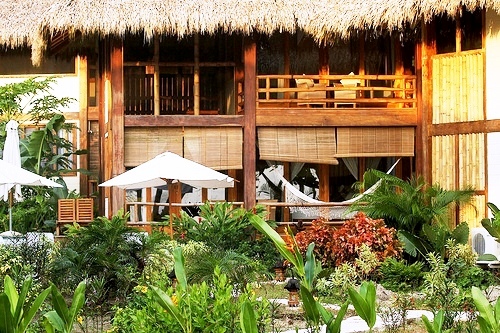
Visit Costa Rica’s Nicoya Peninsula and the fascinating land of the Chorotega people when you stay at Pranamar Oceanfront Villas and Yoga Retreat in Santa Teresa. The beautiful, luxury boutique hotel is located right on the Pacific Ocean at Santa Teresa Beach. Two-story poolside villas and elaborate beachfront bungalows are set in extravagant tropical gardens near a lovely free-form saltwater pool. Winner of Trip Advisor’s Traveler’s Choice and Certificate of Excellence awards, Pranamar Villas offers you daily in-house yoga classes, regular yoga retreats and workshops, all-inclusive yoga vacations, front-yard surfing, and surfing and yoga holidays.
By Shannon Farley
martes, 12 de marzo de 2013
Yoga Stretches for Surfers ... Practice in Costa Rica!
Most surfers are probably already aware that the practice of Yoga results in great benefits for the physical body and beyond.

Yoga increases mental clarity and our ability to concentrate with intention on specific goals and desires. The breathing techniques used in this ancient science are amazing for increasing lung capacity, while helping to lengthen our ability to retain the breath (so necessary for surfers).
On a physical level, the postures (asanas) create flexibility, tone, strengthen, and hone in on our balancing skills. They also fill the body with vital Life energy (prana) and highly raise our body and self-awareness.
The following dynamic and static postures will help you achieve the strength and flexibility needed out in the surf, and will increase your balancing abilities for greater stability on your board.
Remember to always warm-up before heading out to the water, stretch for 5-10 minutes after surfing, and ENJOY!!
1) 3 legged downward dog w/ bent knee
 Begin in downward-facing dog
pose with your hands outer shoulder distance apart and feet parallel to
each other, at least hip width apart. As you lift your hips up and back
you’ll begin to feel a deep stretch along the backs of the legs.
Remember to engage and tone your quadriceps (fronts of the thighs) while
moving the tops of the thighs toward the backs of the legs. Breathe
deeply in and out through the nose and throat, balancing the flow of
breath and helping to calm the mind. Keep the arms strong and stable by
pushing all four corners of the palms and all the fingertips into the
ground and begin to lift your right leg up and into the air behind you.
Lengthen through both legs as you take the right hip higher, “stacking”
the hips and gently twisting from the waistline. Carefully bend the
right knee while flexing the foot and spreading out the toes. The more
you take your foot to the left, the more you will need to tuck your
pelvis to lengthen the lower spine and increase flexibility in the psoas
muscles. Work up to holding the position for 5-15 breaths. Bring the
right leg back to downward dog posture and repeat on the other leg.
Begin in downward-facing dog
pose with your hands outer shoulder distance apart and feet parallel to
each other, at least hip width apart. As you lift your hips up and back
you’ll begin to feel a deep stretch along the backs of the legs.
Remember to engage and tone your quadriceps (fronts of the thighs) while
moving the tops of the thighs toward the backs of the legs. Breathe
deeply in and out through the nose and throat, balancing the flow of
breath and helping to calm the mind. Keep the arms strong and stable by
pushing all four corners of the palms and all the fingertips into the
ground and begin to lift your right leg up and into the air behind you.
Lengthen through both legs as you take the right hip higher, “stacking”
the hips and gently twisting from the waistline. Carefully bend the
right knee while flexing the foot and spreading out the toes. The more
you take your foot to the left, the more you will need to tuck your
pelvis to lengthen the lower spine and increase flexibility in the psoas
muscles. Work up to holding the position for 5-15 breaths. Bring the
right leg back to downward dog posture and repeat on the other leg.
2) Standing Pigeon w/ Eagle arms

Begin standing upright and cross your right ankle over your left lower thigh (right above the knee), keeping the foot active and flexed to protect the knee joint. With your hands on your hips, slowly bend your standing leg and widen your inner thighs back and apart (imagine you are hovering over a chair!).
Bring your arms parallel to the earth, reaching long from the heart center to your fingertips. Then cross your right arm under the left and “wrap” the arms around each other. Energetically lift your elbows and fingers upwards, while dropping your hips and thighs. Hug strongly into the mid-line with the legs and breathe deeply for 5 -10 breaths. Release and try the other side.
3) Forearm plank w/ a "twist"
 Begin
with your knees and forearms on the ground, making sure that your
forearms are parallel to each other and shoulder distance apart. Look
toward your navel and bring your awareness to your core center, the seat
of inner strength and stability. Breathe into your back body from the
base of the spine all the way up toward the crown of the head. As you do
this you will feel your lower abdomen activate and draw inward toward
the spine (away from the floor). Then actively move the tailbone towards
the heels, walking your feet back to straighten your legs (knees off
the floor). Your entire body should be parallel to the earth and you
will feel deep sensation throughout the core of your body. Continue to
breathe slow and even through the nose.
Begin
with your knees and forearms on the ground, making sure that your
forearms are parallel to each other and shoulder distance apart. Look
toward your navel and bring your awareness to your core center, the seat
of inner strength and stability. Breathe into your back body from the
base of the spine all the way up toward the crown of the head. As you do
this you will feel your lower abdomen activate and draw inward toward
the spine (away from the floor). Then actively move the tailbone towards
the heels, walking your feet back to straighten your legs (knees off
the floor). Your entire body should be parallel to the earth and you
will feel deep sensation throughout the core of your body. Continue to
breathe slow and even through the nose.
Keep an emphasis on moving the lower "floating" ribs inward towards the back body, and then slightly soften behind the heart. Hold 5-10 breaths.
Keeping your shoulders steady with your chest facing the earth exhale as you drop your heels to the right, twisting your lower body to active the lateral abdominal muscles. Inhale back to center and drop your heels to the left as you strongly exhale (remember to keep the belly lifted in towards the spine). Return to center with an inhalation and continue going right to left in alignment with your breathing. Do your best to keep your upper body stable and still. Work up to 10 repetitions or more.
4) Dynamic “Shalabasana” w/opposite arm and leg

Lay down on your stomach with your legs hip distance apart and arms extended out in front of you (shoulder distance apart). Keeping your gaze facing the floor, turn the palms of the hands to face each other, and as you inhale lift your right arm, chest, and left leg up off the earth. The emphasis of this movement is not to get your limbs as high as possible, but rather keep lengthening the whole spine and reach your leg long out of the hip and the crown of the head away from the tailbone. Focus your inhalation in the back of the body, thus breathing "space" into the spine. Lower your self back to the floor on the exhalation, but keep awareness into the lower abdomen and gently lift the navel inward with the release.
On your next inhalation, lift your left arm, chest, and right leg off the floor and maintain the action of lengthening from the core of your pelvis down the legs and up the spine toward the fingertips. With the exhalation, return to lie on the ground and repeat each side, alternating right and left 5-10 times each.
On the last repetition of each side, try and hold the arm and leg up off the floor for 5 slow, even breathes. Emphasize the length of the spine and the gentle lifting of the belly in and up. Finish by sitting back on the heels with the chest resting on the thighs (child’s pose), arms and head relaxed on floor. Feel how working with opposite leg and arm can bring more awareness into your "center" and help you to connect with the innate intelligence of the body to stay centered and grounded.
5) Navasana prayer

Begin seated on the ground with your knees drawn into your chest, grabbing the backs of the thighs with your hands. With the knees bent, first lift up along the spine moving the crown of the head toward the sky and the tailbone firmly down to the earth. Begin to straighten your legs into the air as you release your grip on the hamstrings. As you continue to sit up tall, draw your lower back away from the floor and the sacrum into the body (you will need to fully engage your core as you balance on the buttocks creating a V-shape with your body). Extending the arms parallel to the ground, relax your shoulders and move energetically along the legs from the hips to the toes. Actively lift up along the whole length of the spine, keeping the chest broad and the abdomen fully engaged. Work toward holding this static position for 5-15 breaths.
Then bring your palms together in front of your chest (anjali mudra) and actively press the hands into one another. Slightly lift the elbows away from the floor and inhale. Moving with your exhalation, turn your whole upper body toward the right engaging the side abdominal muscles with a twist. As you inhale, return to center and press the hands into each other. On your next exhale, twist as far as you can to the left with your upper body, keeping the legs together and lifted. Return to center as you inhale. Continue to twist right and left on the exhalations, always pausing in center as you inhale to re-lengthen the spine.
Build up slowly, and increase the number of repetitions as you feel stronger. If you have less flexibility in your hamstrings or hips, then you may want to bend the knees slightly.

Pranamar Villas and Yoga Retreat in Santa Teresa
If you enjoyed this practice and want more, come to the beautiful Pacific Coast of Costa Rica in the surfer’s and yogi’s paradise of Santa Teresa and Pranamar Villas and Yoga Retreat. It’s the perfect blend of surfing and yoga and much more!!
By Nancy Goodfellow, Yoga Instructor at Pranamar Villas & Yoga Retreat
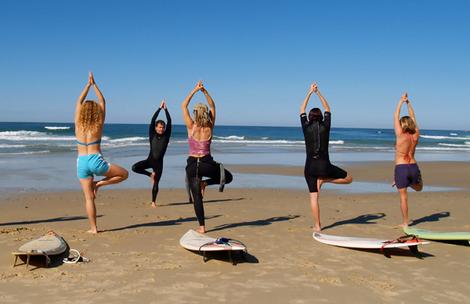
Yoga increases mental clarity and our ability to concentrate with intention on specific goals and desires. The breathing techniques used in this ancient science are amazing for increasing lung capacity, while helping to lengthen our ability to retain the breath (so necessary for surfers).
On a physical level, the postures (asanas) create flexibility, tone, strengthen, and hone in on our balancing skills. They also fill the body with vital Life energy (prana) and highly raise our body and self-awareness.
The following dynamic and static postures will help you achieve the strength and flexibility needed out in the surf, and will increase your balancing abilities for greater stability on your board.
Remember to always warm-up before heading out to the water, stretch for 5-10 minutes after surfing, and ENJOY!!
1) 3 legged downward dog w/ bent knee
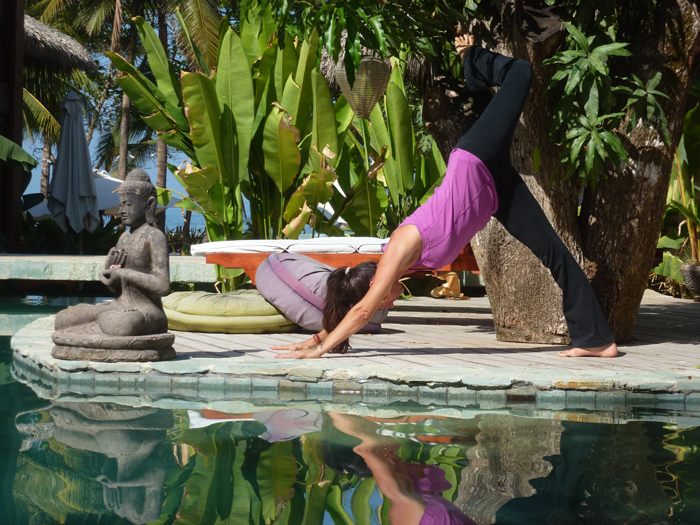 Begin in downward-facing dog
pose with your hands outer shoulder distance apart and feet parallel to
each other, at least hip width apart. As you lift your hips up and back
you’ll begin to feel a deep stretch along the backs of the legs.
Remember to engage and tone your quadriceps (fronts of the thighs) while
moving the tops of the thighs toward the backs of the legs. Breathe
deeply in and out through the nose and throat, balancing the flow of
breath and helping to calm the mind. Keep the arms strong and stable by
pushing all four corners of the palms and all the fingertips into the
ground and begin to lift your right leg up and into the air behind you.
Lengthen through both legs as you take the right hip higher, “stacking”
the hips and gently twisting from the waistline. Carefully bend the
right knee while flexing the foot and spreading out the toes. The more
you take your foot to the left, the more you will need to tuck your
pelvis to lengthen the lower spine and increase flexibility in the psoas
muscles. Work up to holding the position for 5-15 breaths. Bring the
right leg back to downward dog posture and repeat on the other leg.
Begin in downward-facing dog
pose with your hands outer shoulder distance apart and feet parallel to
each other, at least hip width apart. As you lift your hips up and back
you’ll begin to feel a deep stretch along the backs of the legs.
Remember to engage and tone your quadriceps (fronts of the thighs) while
moving the tops of the thighs toward the backs of the legs. Breathe
deeply in and out through the nose and throat, balancing the flow of
breath and helping to calm the mind. Keep the arms strong and stable by
pushing all four corners of the palms and all the fingertips into the
ground and begin to lift your right leg up and into the air behind you.
Lengthen through both legs as you take the right hip higher, “stacking”
the hips and gently twisting from the waistline. Carefully bend the
right knee while flexing the foot and spreading out the toes. The more
you take your foot to the left, the more you will need to tuck your
pelvis to lengthen the lower spine and increase flexibility in the psoas
muscles. Work up to holding the position for 5-15 breaths. Bring the
right leg back to downward dog posture and repeat on the other leg.2) Standing Pigeon w/ Eagle arms
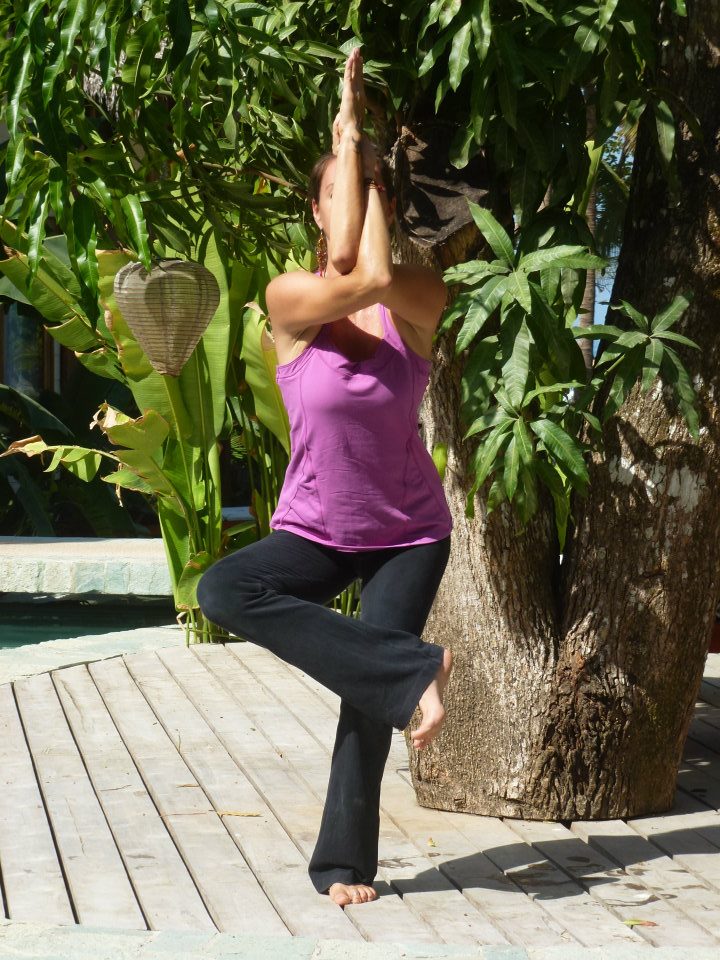
Begin standing upright and cross your right ankle over your left lower thigh (right above the knee), keeping the foot active and flexed to protect the knee joint. With your hands on your hips, slowly bend your standing leg and widen your inner thighs back and apart (imagine you are hovering over a chair!).
Bring your arms parallel to the earth, reaching long from the heart center to your fingertips. Then cross your right arm under the left and “wrap” the arms around each other. Energetically lift your elbows and fingers upwards, while dropping your hips and thighs. Hug strongly into the mid-line with the legs and breathe deeply for 5 -10 breaths. Release and try the other side.
3) Forearm plank w/ a "twist"
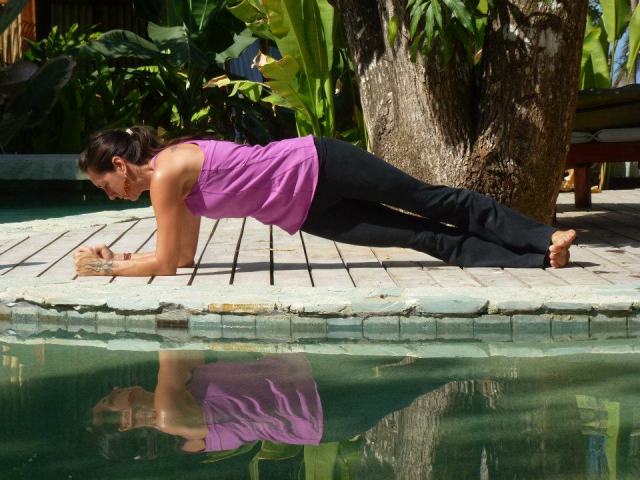 Begin
with your knees and forearms on the ground, making sure that your
forearms are parallel to each other and shoulder distance apart. Look
toward your navel and bring your awareness to your core center, the seat
of inner strength and stability. Breathe into your back body from the
base of the spine all the way up toward the crown of the head. As you do
this you will feel your lower abdomen activate and draw inward toward
the spine (away from the floor). Then actively move the tailbone towards
the heels, walking your feet back to straighten your legs (knees off
the floor). Your entire body should be parallel to the earth and you
will feel deep sensation throughout the core of your body. Continue to
breathe slow and even through the nose.
Begin
with your knees and forearms on the ground, making sure that your
forearms are parallel to each other and shoulder distance apart. Look
toward your navel and bring your awareness to your core center, the seat
of inner strength and stability. Breathe into your back body from the
base of the spine all the way up toward the crown of the head. As you do
this you will feel your lower abdomen activate and draw inward toward
the spine (away from the floor). Then actively move the tailbone towards
the heels, walking your feet back to straighten your legs (knees off
the floor). Your entire body should be parallel to the earth and you
will feel deep sensation throughout the core of your body. Continue to
breathe slow and even through the nose.Keep an emphasis on moving the lower "floating" ribs inward towards the back body, and then slightly soften behind the heart. Hold 5-10 breaths.
Keeping your shoulders steady with your chest facing the earth exhale as you drop your heels to the right, twisting your lower body to active the lateral abdominal muscles. Inhale back to center and drop your heels to the left as you strongly exhale (remember to keep the belly lifted in towards the spine). Return to center with an inhalation and continue going right to left in alignment with your breathing. Do your best to keep your upper body stable and still. Work up to 10 repetitions or more.
4) Dynamic “Shalabasana” w/opposite arm and leg
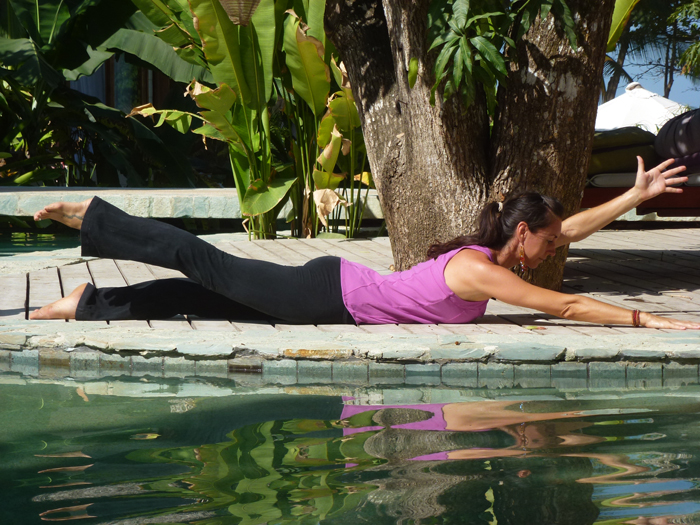
Lay down on your stomach with your legs hip distance apart and arms extended out in front of you (shoulder distance apart). Keeping your gaze facing the floor, turn the palms of the hands to face each other, and as you inhale lift your right arm, chest, and left leg up off the earth. The emphasis of this movement is not to get your limbs as high as possible, but rather keep lengthening the whole spine and reach your leg long out of the hip and the crown of the head away from the tailbone. Focus your inhalation in the back of the body, thus breathing "space" into the spine. Lower your self back to the floor on the exhalation, but keep awareness into the lower abdomen and gently lift the navel inward with the release.
On your next inhalation, lift your left arm, chest, and right leg off the floor and maintain the action of lengthening from the core of your pelvis down the legs and up the spine toward the fingertips. With the exhalation, return to lie on the ground and repeat each side, alternating right and left 5-10 times each.
On the last repetition of each side, try and hold the arm and leg up off the floor for 5 slow, even breathes. Emphasize the length of the spine and the gentle lifting of the belly in and up. Finish by sitting back on the heels with the chest resting on the thighs (child’s pose), arms and head relaxed on floor. Feel how working with opposite leg and arm can bring more awareness into your "center" and help you to connect with the innate intelligence of the body to stay centered and grounded.
5) Navasana prayer
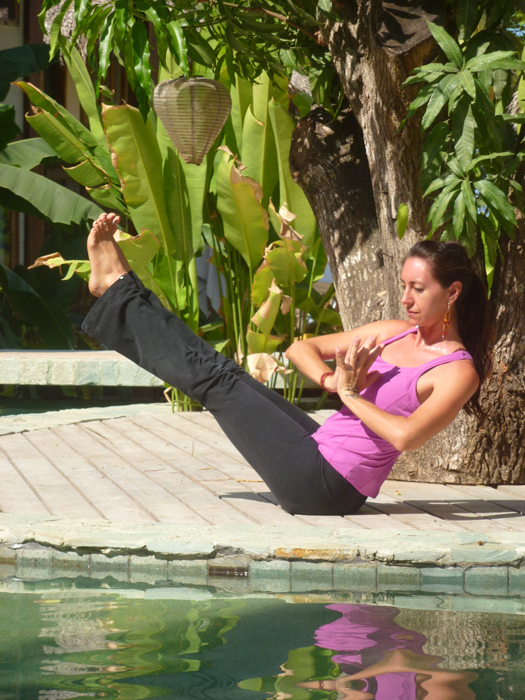
Begin seated on the ground with your knees drawn into your chest, grabbing the backs of the thighs with your hands. With the knees bent, first lift up along the spine moving the crown of the head toward the sky and the tailbone firmly down to the earth. Begin to straighten your legs into the air as you release your grip on the hamstrings. As you continue to sit up tall, draw your lower back away from the floor and the sacrum into the body (you will need to fully engage your core as you balance on the buttocks creating a V-shape with your body). Extending the arms parallel to the ground, relax your shoulders and move energetically along the legs from the hips to the toes. Actively lift up along the whole length of the spine, keeping the chest broad and the abdomen fully engaged. Work toward holding this static position for 5-15 breaths.
Then bring your palms together in front of your chest (anjali mudra) and actively press the hands into one another. Slightly lift the elbows away from the floor and inhale. Moving with your exhalation, turn your whole upper body toward the right engaging the side abdominal muscles with a twist. As you inhale, return to center and press the hands into each other. On your next exhale, twist as far as you can to the left with your upper body, keeping the legs together and lifted. Return to center as you inhale. Continue to twist right and left on the exhalations, always pausing in center as you inhale to re-lengthen the spine.
Build up slowly, and increase the number of repetitions as you feel stronger. If you have less flexibility in your hamstrings or hips, then you may want to bend the knees slightly.
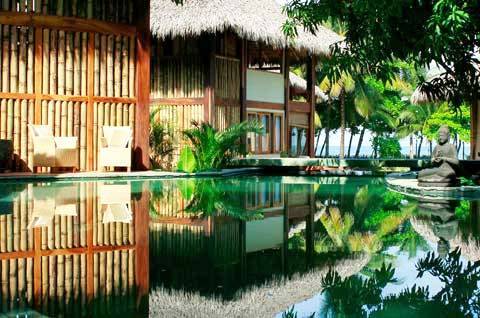
Pranamar Villas and Yoga Retreat in Santa Teresa
If you enjoyed this practice and want more, come to the beautiful Pacific Coast of Costa Rica in the surfer’s and yogi’s paradise of Santa Teresa and Pranamar Villas and Yoga Retreat. It’s the perfect blend of surfing and yoga and much more!!
By Nancy Goodfellow, Yoga Instructor at Pranamar Villas & Yoga Retreat
Suscribirse a:
Entradas (Atom)